
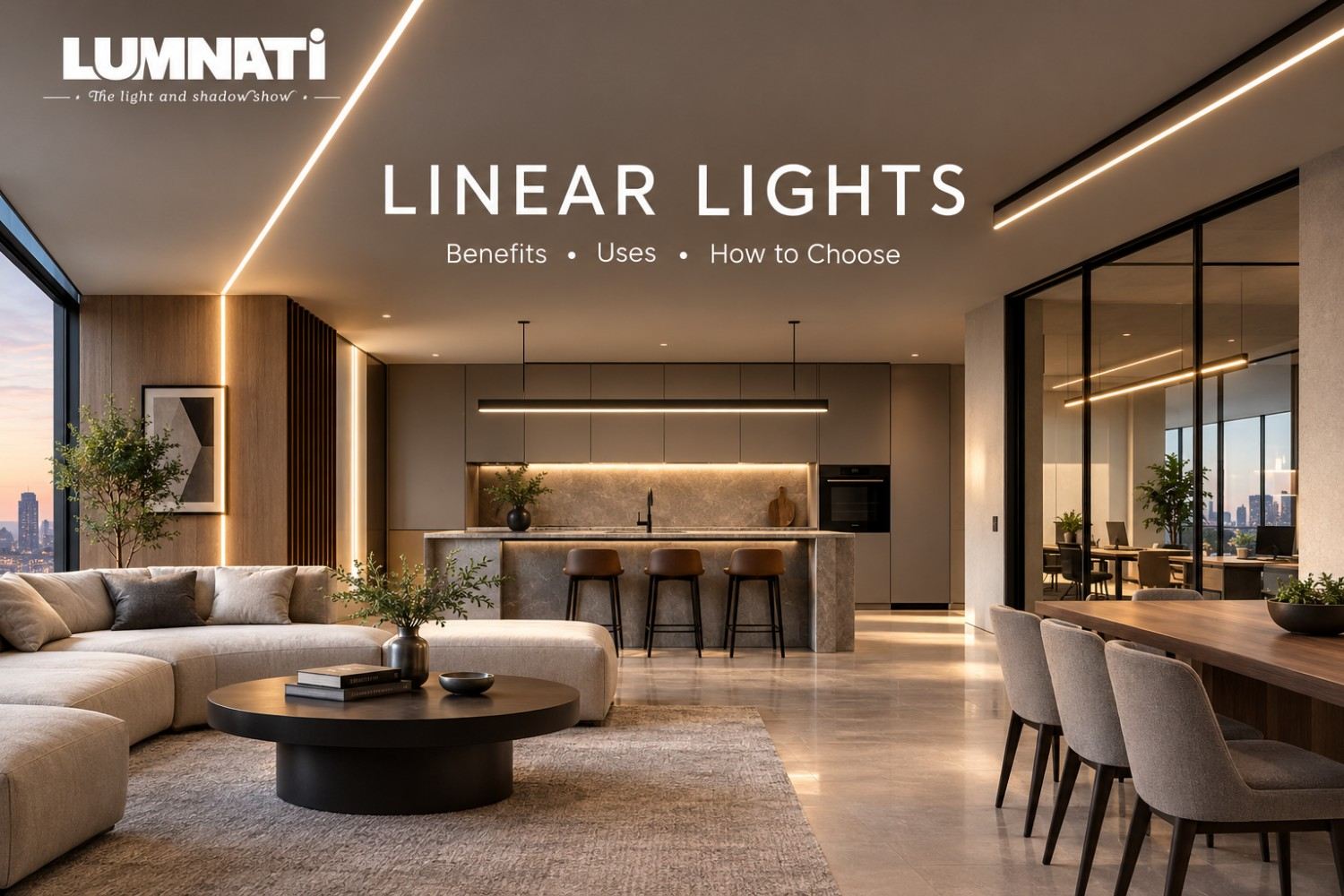
Linear Lights are long, slim light fixtures that spread light in a continuous line instead of a single point. They give smooth, even illumination and a clean, modern look. That's why designers use them in homes, offices, retail spaces, and hospitality projects. Lumnati offers its own range of Linear Lights in the Liny Series.
If you've walked into a stylish café or a sleek office and noticed a thin, glowing line running across the ceiling, you've already seen Linear Lights at work. Let's look at what they are, why people love them, and how to pick the right ones for your space.
What Are Linear Lights?
Linear Lights are elongated lighting fixtures, usually a slim aluminium profile with LED light inside. Instead of a round bulb throwing a bright spot, they stretch light along a straight line. They can be mounted on a ceiling, hung from it, recessed into it, or fixed to a wall.
The result is a soft, continuous glow with very few harsh spots or dark patches. The fixture itself also looks tidy. Many designers treat it as part of the architecture, not just something that brightens a room.
Where Are Linear Lights Used?
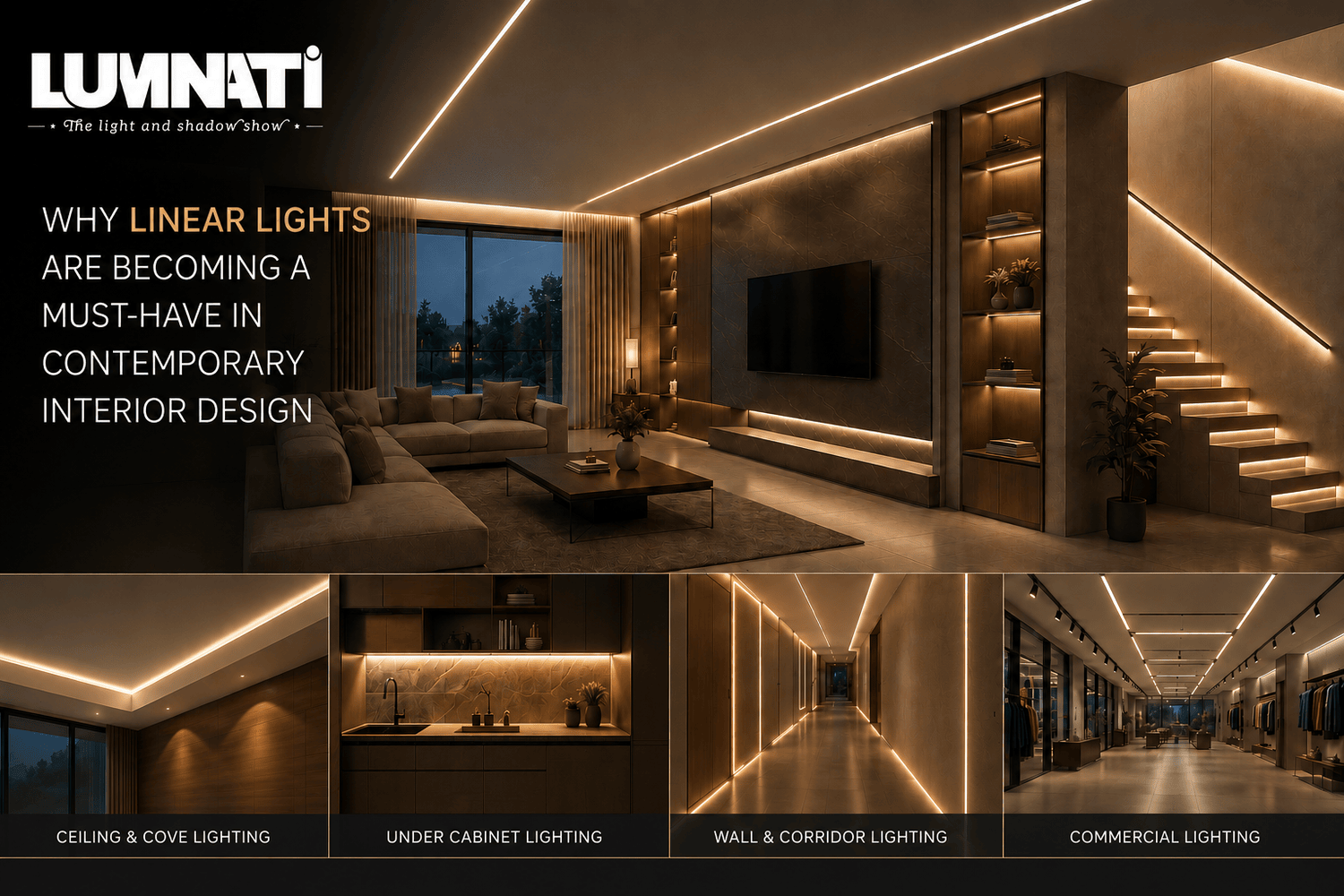
You'll find Linear Lights almost anywhere that needs clean, even light:
-
Homes: kitchens, living rooms, corridors, and study areas
-
Offices: open workspaces, meeting rooms, and reception areas
-
Retail stores: shelves, display walls, and walkways
-
Hospitality: hotel lobbies, restaurants, and lounges
-
Commercial areas: hallways, showrooms, and parking spaces
Because they come in many lengths and can be joined end to end, they suit small rooms and large open floors alike.
The Main Benefits of Linear Lights
1. Even, comfortable light
A single downlight creates a bright circle with dimmer edges. Linear Lights spread illumination across a longer stretch, so the room feels balanced. This is easier on the eyes, especially in places where people work or read for hours.
2. A clean, modern look
Straight lines make a room look organised. Linear Lights can trace the shape of a space, highlight a wall, or divide an open-plan area without adding a single wall. They work well in minimal, contemporary, and industrial interiors.
3. Energy efficiency
Modern Linear Lights use LED technology, which draws far less power than older fluorescent or halogen lighting. Lower electricity use means smaller bills over time, and LEDs generally last much longer, so you replace fixtures less often.
4. Flexible installation
Depending on the model, you can recess them, surface-mount them, or suspend them. That flexibility lets architects and interior designers fit them into almost any ceiling or wall plan.
5. Less glare
Well-designed Linear Lights come with diffusers and optics that soften the output. This reduces glare and screen reflections, which matters in offices, classrooms, and retail spaces. For example, Lumnati also lists a low-glare architectural linear option for commercial car parks on its site.
6. Fewer fixtures, cleaner ceilings
One long fixture can do the work of several small ones. That means fewer holes in the ceiling, fewer wires, and a neater finish.
7. Works for both function and style
Linear Lights can act as the main light for a room or as an accent that adds mood and depth. Few fixtures do both this well.
How Linear Lights Compare to Other Indoor Lighting
Linear Lights are not always the answer to everything, so it helps to know how they sit alongside other fixtures.
Downlights give a round, focused pool of light and keep the ceiling looking clean, which makes them a good fit for general room lighting. Magnetic Track Lights offer movable, adjustable heads, so they suit flexible layouts and feature highlights. Grazers and Strips create a wall wash or edge glow, which works well on textured walls, coves, and shelves. Linear Lights, meanwhile, give a continuous line of light that suits ambient and task lighting and follows the architecture of a space.
In many well-lit rooms, designers mix these types. Linear Lights might handle the main illumination, while downlights and track lights add accents. You can browse all of these in Lumnati's indoor lighting collection.
Meet the Lumnati Liny Series
Lumnati's Linear Lights are offered under the Liny Series. According to the brand, the series is designed to deliver precise illumination that lets you highlight spaces with both style and function. It's a versatile collection, so it suits residential interiors as well as commercial projects.
You can explore the full range on the Lumnati Linear Lights page or go straight to the Liny Series to see the available products. To learn more about the company behind them, visit About Lumnati.
How to Choose the Right Linear Lights
Picking the right fixture is easier if you think through a few points first.
Start with the room's purpose. A kitchen or workspace needs brighter, more functional light. A lounge or bedroom usually benefits from softer, warmer light.
Check the colour temperature. Warm white feels cosy and welcoming. Neutral white suits offices and kitchens. Cool white feels crisp and alert, and it works in utility or commercial spaces.
Think about mounting. Recessed fixtures give the cleanest ceiling. Suspended ones add a design statement and work well in high ceilings. Surface-mounted ones are simple when you can't cut into the ceiling.
Measure the space. Choose a length that fits the wall or ceiling line naturally. Runs that line up with furniture or architectural features usually look best.
Look at glare control. If people will be looking at screens or sitting under the light for long periods, pick a fixture with a good diffuser or optic.
Check the warranty. Reliable lighting should come with clear terms. Lumnati publishes its warranty details, so you know what's covered before you buy.
Not sure what fits? You can contact the Lumnati team with your room size and lighting goals, and they can point you in the right direction.
A Few Practical Tips
-
Layer your lighting. Combine Linear Lights with a few accent fixtures for depth.
-
Add dimming where you can. It lets one room work for many moods.
-
Keep fixtures aligned with walls, furniture, or ceiling grids so the lines look intentional.
-
Avoid placing bright lines directly in the eye line of seating areas.
For more ideas, check out the Lumnati blog.
Frequently Asked Questions
1. What are Linear Lights?
Linear Lights are slim, elongated LED fixtures that spread light in a continuous line instead of a single spot.
2. What are the benefits of Linear Lights?
They give even light, reduce glare, save energy, and add a clean, modern look to interiors.
3. Are Lumnati Linear Lights suitable for homes?
Yes. The Lumnati Liny Series is versatile enough for residential and commercial interiors.
4. Where can I install Linear Lights?
You can use them in kitchens, living rooms, offices, retail stores, hallways, and hotel interiors.
5. Are Linear Lights energy efficient?
Yes. LED-based Linear Lights use much less power than traditional lighting and last longer.
6. Where can I see Lumnati's Linear Lights range?
You can view the full range on the Lumnati Linear Lights page.
7. How do I get help choosing Linear Lights from Lumnati?
Reach out through the Lumnati contact page, and the team can guide you.
Final Thoughts
Linear Lights combine practical, even illumination with a sleek design, which is why they've become a favourite in modern interiors. They save energy, cut glare, and let you shape a space with a single clean line of light. If you're planning a new build or a refresh, the Lumnati Liny Series is a good place to start.
1786536088.jpeg)