
Most bad lighting doesn't look bad. It looks fine. A downlight here, a chandelier there, everything technically "working," and yet the room feels flat, disjointed, like the light and the architecture were designed by two people who never spoke to each other. That's the problem interior designers have been quietly solving over the last few years, and the solution they keep landing on is deceptively simple: stop lighting rooms in points, and start lighting them in lines.
That's the whole idea behind linear lighting. A single continuous run of light instead of a scattering of bulbs. And once you start noticing it, tucked into a ceiling cove, running under a kitchen counter, tracing the edge of a staircase, you can't unsee it. It's become one of the defining signatures of good interior design right now, and it's not hard to understand why once you look at what it actually does to a space.
The Real Reason Designers Have Shifted to Linear Light
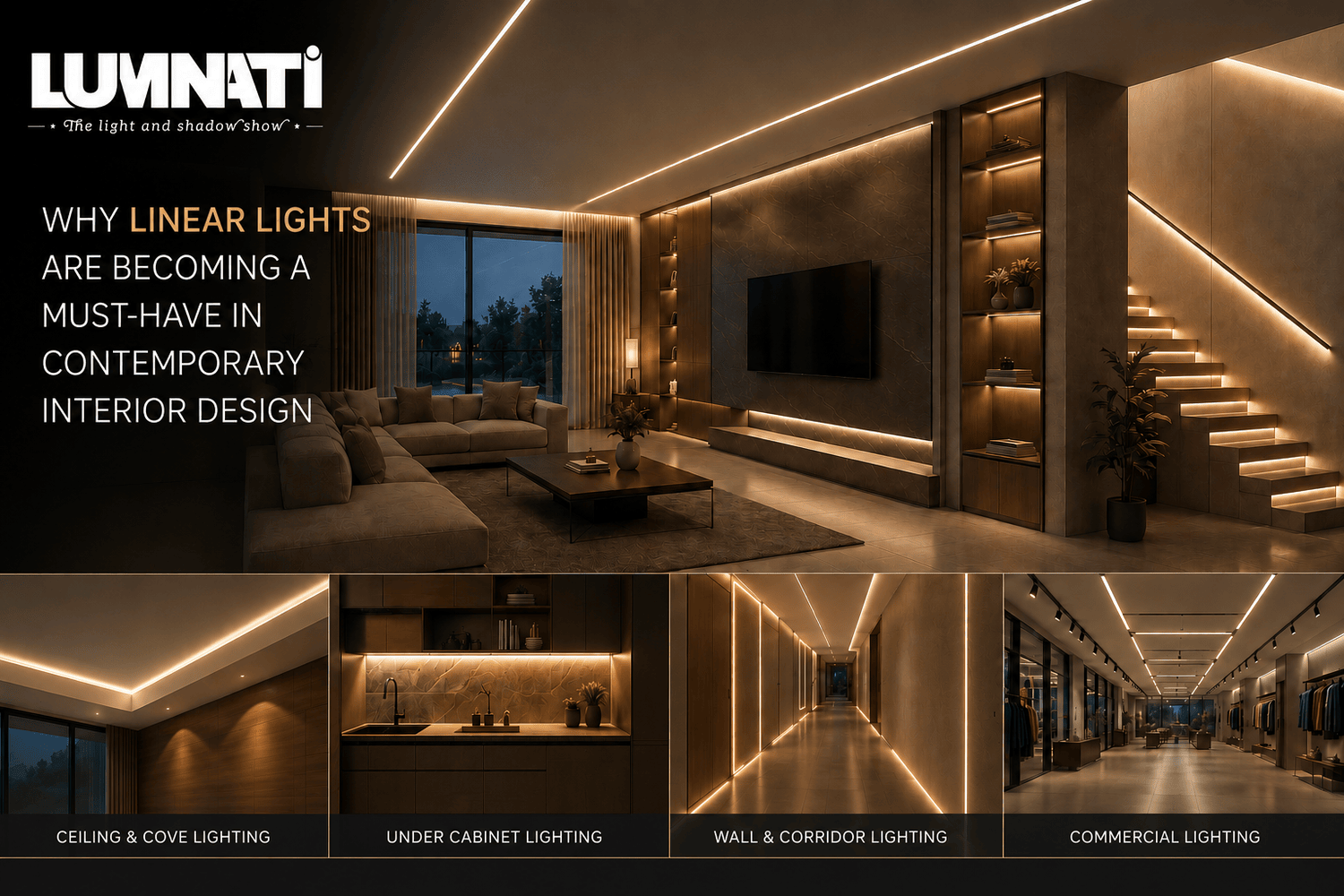
A spotlight announces itself. It creates a bright circle on the floor or wall and asks you to look at it. A linear fixture does the opposite. It disappears into the architecture and lets the architecture do the talking. Run it along a cove and the ceiling looks higher. Hide it under a shelf and the furniture looks like it's floating. Trace it along a hallway and the whole corridor feels like it's guiding you somewhere, instead of just being a corridor with some lights in it.
This is the shift that's made LED linear light fixtures a standard line item in design plans rather than an optional upgrade. They're not chosen because they're trendy. They're chosen because they solve a problem spotlights and pendant lights can't. They let light behave like a design material, not an afterthought bolted on at the end.
It Doesn't Care Whether You're Designing a Bedroom or a Boardroom
What's kept linear lighting from being a passing fad is how well it scales. In a home, it's the light under the cabinet that makes cooking dinner feel less like standing under an interrogation lamp. It's the strip inside the wardrobe that makes picking an outfit at 7 a.m. slightly less painful. It's the cove light around a false ceiling that makes an 8 foot room feel taller than it is.
Move into commercial territory and the stakes, and the payoff, get bigger. Linear lighting for commercial spaces has become close to a default in retail, hospitality, and office design, for practical reasons. A store fitted with the right linear layout can light merchandise evenly without the harsh shadows a downlight throws. An office can cut the glare and eye strain that come from old fluorescent tube setups. A restaurant or hotel lobby can use one clean line of light across the ceiling to signal, instantly, that someone actually designed this place instead of just furnishing it. And because linear fixtures are modular, the same visual language can be scaled from a small cafe to a five-floor commercial building without looking like two different projects.
The Part Everyone Actually Cares About: It Also Saves Money
Design appeal aside, linear lighting earns its place for a colder, more practical reason. It's efficient. Most linear fixtures run on LED, which uses a fraction of the power older lighting systems need, lasts considerably longer, and rarely demands maintenance. In a home, that's a smaller electricity bill. In a commercial space running lights for ten or more hours a day, that difference compounds into real year-over-year savings.
There's also flexibility most people don't think about until they need it: the ability to shift colour temperature depending on the moment. Crisp white light for a space that needs focus. Warm, low tones for a space that's meant to feel unwound. That range is a big part of why designers keep specifying linear lighting for spaces with a very specific mood to hit, not just a brightness target.
Where LUMNATI Fits Into This
This is the exact space LUMNATI operates in. Our position is straightforward. No lumen should go to waste, and no design intent should get diluted just because it's more convenient to install something generic instead. Every fixture starts with a question many brands skip entirely: what is this space actually trying to communicate? Our team of trained lighting designers works from that question outward, syncing the architectural intent of a villa, a retail outlet, or a commercial complex with the fixtures we build for it.
With a catalogue of over 3,000 products, LUMNATI can either wash a space in soft, total ambience or carve out a much more deliberate interplay of light and shadow, whichever the design calls for. Behind that range is a manufacturing process built for consistency, with quality checks updated regularly to keep pace with how quickly lighting technology moves. So when someone chooses to buy LED linear lights online through LUMNATI, they're not picking a fixture off a generic list. They're getting something built to the same standard our design team holds for every project.
Linear lighting has earned its place in modern interior design because it solves a problem that's existed as long as buildings have: how to light a space well without the fixture pulling focus away from the design itself. Whether the project is a home, a retail store, or a full commercial complex, the fixture chosen and the team behind it quietly shape how that space feels for years afterward. With a design first approach, a wide product range, and consistently enforced quality standards, LUMNATI makes getting that balance right a lot less complicated.
Frequently Asked Questions
What is a linear light?
A linear light is an elongated LED fixture that produces one continuous, even line of illumination instead of a single point of light like a standard bulb. It's typically installed in ceiling coves, wall recesses, under cabinets, or along architectural edges to create smooth, glare free lighting that supports a space's design instead of competing with it.
What is the price of a 4-foot linear light?
Pricing for a 4-foot linear light depends on wattage, LED quality, and the type of finish or diffuser used. Costs vary between entry-level and premium options, so it's best to check current LUMNATI listings or speak directly with our team for a quote matched to your specific requirement.
What is the cost of a linear light for a ceiling?
Ceiling linear lights are priced based on installation type, surface mounted, recessed, or suspended, along with length and features like dimming or adjustable colour temperature. A small residential run will cost noticeably less than a large commercial installation with custom configurations, so it's worth confirming pricing against your exact layout.
What is the price of an 8-feet linear light?
An 8-feet linear light generally costs more than shorter versions since it requires higher wattage to keep brightness consistent across its length. Final pricing depends on brand, build quality, and technical specification, so comparing options directly through a trusted supplier's catalogue remains the most reliable way to get an accurate number.
1786536088.jpeg)