
Lighting plays an important role in creating comfortable, attractive, and functional indoor spaces. Whether it is a home, office, hotel, showroom, or retail store, the quality of lighting can significantly influence how people experience an environment. While brightness is often the first thing people consider when choosing lighting, colour accuracy is equally important. This is where High CRI downlights make a difference.
High CRI downlights are designed to reproduce colours more naturally and accurately compared to standard lighting solutions. They help interior finishes, furniture, decorative elements, artwork, and other objects appear closer to their actual colours. For anyone planning premium interior lighting, understanding CRI is essential.
Brands like Lumnati can be explored when looking for lighting solutions that combine visual comfort, colour quality, and modern lighting design.
What Are High CRI Downlights?
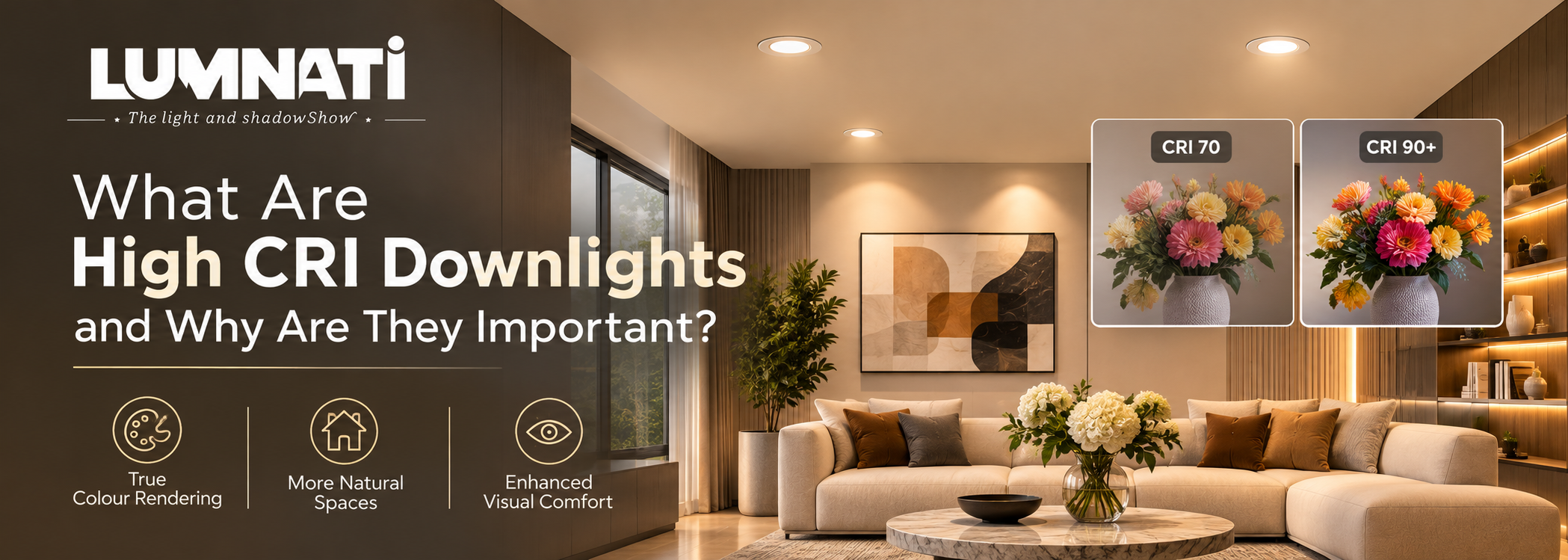
CRI stands for Colour Rendering Index. It is a measurement used to describe how accurately a light source reveals the colours of objects compared with a reference light source under specified conditions.
The CRI scale generally ranges from 0 to 100. A higher CRI value indicates better colour rendering for the colours measured by the standard CRI method.
High CRI downlights are LED lighting fixtures designed to provide improved colour accuracy. They are particularly useful in spaces where natural-looking colours and visual presentation matter.
For example, under high CRI lighting:
- Wall paint colours can appear more natural.
- Furniture finishes can look closer to their actual shades.
- Clothing and fabrics can display more accurate colours.
- Food and decorative displays can look more appealing.
- Artwork and interior design elements can be viewed with better colour fidelity.
Generally, CRI 90 and above is considered high colour-rendering performance for many premium indoor lighting applications.
Understanding CRI 80, CRI 90 and CRI 95
Before purchasing LED downlights, it is useful to understand the differences between common CRI ratings.
CRI 80
CRI 80 lighting is commonly used in general residential and commercial applications. It offers acceptable colour rendering for everyday lighting requirements.
CRI 90
CRI 90 downlights provide improved colour accuracy and are suitable for premium residential interiors, hospitality spaces, retail environments, and other areas where colour appearance is important.
CRI 95
CRI 95 lighting offers very high colour rendering performance and is particularly useful for specialised applications such as art displays, luxury retail environments, galleries, and design-focused spaces.
The right CRI rating depends on the intended application, lighting requirements, product quality, and budget.
Why Are High CRI Downlights Important?
High CRI downlights offer several benefits that go beyond simply illuminating a room.
1. More Accurate Colour Representation
One of the biggest advantages of High CRI downlights is their ability to reproduce colours more accurately. Standard lighting can sometimes make certain colours appear dull, muted, or different from their actual appearance.
High CRI lighting helps reveal the natural appearance of colours, making it a valuable choice for spaces with carefully selected interior finishes.
2. Enhances Interior Design
Interior designers spend considerable time selecting wall colours, flooring, furniture, fabrics, and decorative materials. Poor colour rendering can affect how these elements appear once installed.
High CRI downlights help preserve the intended visual appearance of interior materials and create a more refined atmosphere.
3. Improves Retail Product Presentation
In retail stores and showrooms, product appearance can influence customer perception. Clothing, furniture, accessories, and decorative products should be displayed with accurate colours.
High CRI lighting can help businesses present products more naturally and create a better shopping experience.
4. Ideal for Premium Residential Lighting
Modern homeowners often invest in attractive interiors, premium furniture, artwork, and decorative finishes. High CRI downlights help highlight these details while maintaining a natural lighting appearance.
They are suitable for living rooms, bedrooms, kitchens, dining spaces, and other residential areas where colour quality matters.
5. Enhances Hospitality Environments
Hotels, restaurants, cafés, and luxury hospitality spaces depend on lighting to create a welcoming atmosphere.
High CRI downlights can help improve the appearance of food, furniture, decorative materials, and interior finishes, contributing to an attractive guest experience.
6. Supports Visual Tasks
In environments where people need to distinguish colours accurately, good colour rendering can be beneficial. High CRI lighting is useful in design studios, makeup areas, showrooms, and other colour-sensitive applications.
Where Can High CRI Downlights Be Used?
High CRI downlights are versatile lighting solutions that can be used in several residential and commercial applications.
Residential Spaces
- Living rooms: Highlight furniture, wall finishes, and decorative elements.
- Kitchens: Help reveal the natural appearance of food and kitchen surfaces.
- Bedrooms: Support comfortable and visually appealing interior lighting.
- Dining areas: Enhance the appearance of food and table settings.
- Walk-in wardrobes: Help display clothing colours more accurately.
Commercial Spaces
- Retail stores: Improve the presentation of products and merchandise.
- Hotels: Enhance interior finishes and guest environments.
- Restaurants: Help food and interior details appear more natural.
- Art galleries: Support accurate viewing of displayed artwork.
- Offices: Provide colour-conscious lighting for design and presentation areas.
Important Factors to Consider When Choosing High CRI Downlights
Choosing the right downlight requires more than checking its CRI rating. Consider the following factors before making a purchase.
1. CRI Rating
Look for CRI 90 or above when colour accuracy is an important requirement. For specialised applications, CRI 95 products may be worth considering.
2. R9 Value
R9 measures how accurately a light source renders saturated red colours. This is important because the general CRI Ra value does not include R9 in its calculation.
A good R9 value can be especially useful in applications involving skin tones, food presentation, artwork, and warm-coloured materials.
3. Colour Temperature
Colour temperature affects the overall appearance and mood of a space.
- 2700K: Warm and cosy lighting.
- 3000K: Warm white lighting suitable for many residential interiors.
- 4000K: Neutral white lighting for modern interiors and workspaces.
- 5000K: Cooler daylight-like appearance for applications that require it.
The appropriate colour temperature depends on the interior design and intended atmosphere.
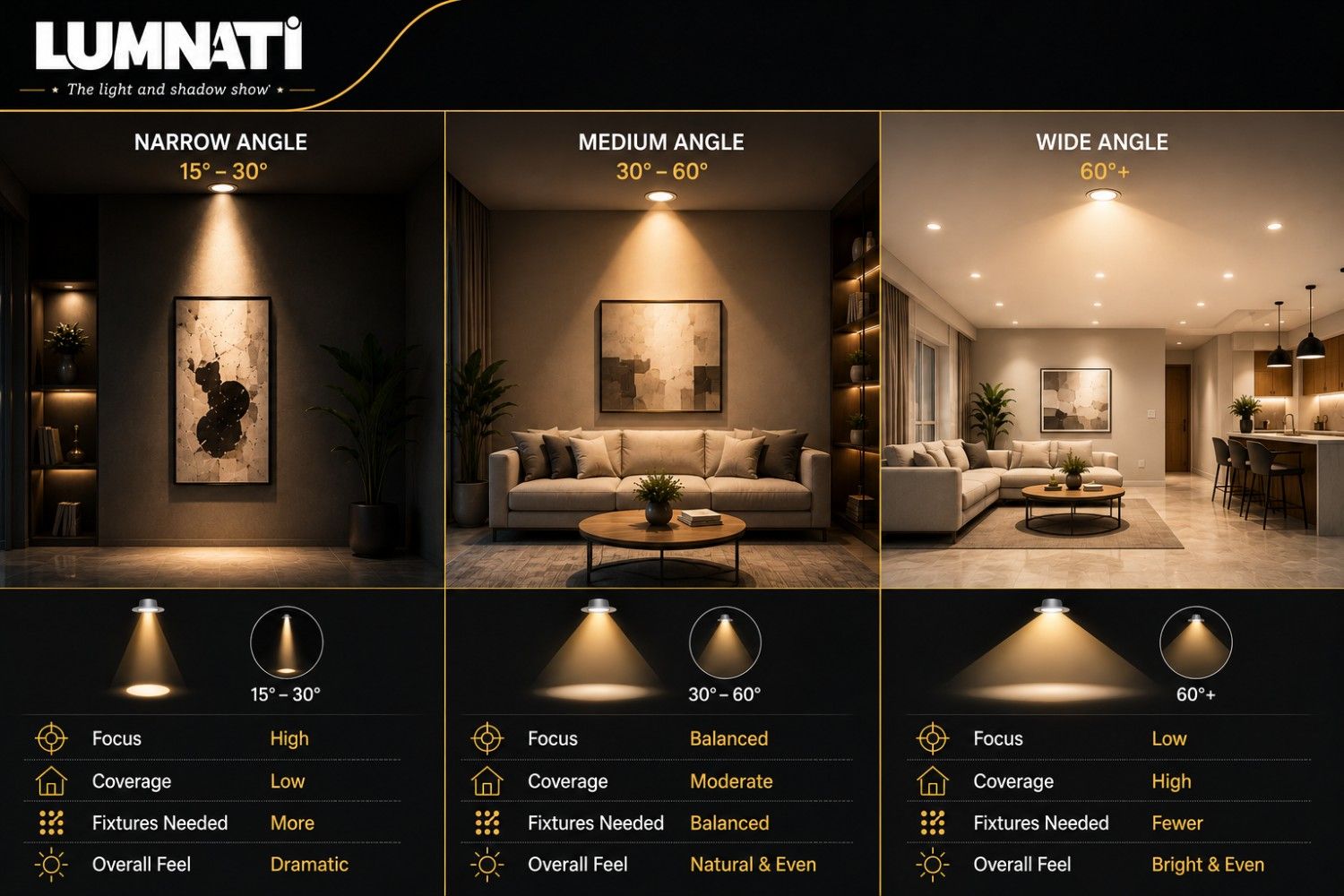
4. Beam Angle
Beam angle determines how light is distributed across a surface.
A narrow beam can create focused accent lighting, while a wider beam can provide more general illumination. Choose the beam angle according to ceiling height, room size, and lighting requirements.
5. Glare Control
Glare can reduce visual comfort, especially in spaces where people spend long periods. Consider downlights with suitable optical design, shielding, and glare-control features.
6. Energy Efficiency and Lifespan
Compare power consumption, lumen output, efficacy, thermal management, warranty, and expected product life. A good lighting solution should provide the required illumination while maintaining reliable performance.
Why Consider Lumnati for High CRI Downlights?
When exploring premium lighting solutions, Lumnati is a brand worth researching for modern lighting applications.
Before choosing any Lumnati downlight, customers should evaluate the available product specifications, including CRI rating, R9 performance, colour temperature, beam angle, lumen output, glare control, and warranty.
Selecting a suitable lighting product based on these technical specifications helps ensure that it meets the functional and aesthetic requirements of the space.
For homeowners, architects, interior designers, and lighting consultants, comparing the right specifications is an important step towards achieving high-quality indoor lighting.
High CRI Downlights vs Standard LED Downlights
Understanding the difference between high CRI and standard LED downlights can help you make a better lighting decision.
| Feature | Standard LED Downlights | High CRI Downlights |
|---|---|---|
| Colour rendering | Typically CRI 80 or similar | Generally CRI 90 or above |
| Colour accuracy | Standard | Improved |
| Interior finishes | May appear less accurate | More natural appearance |
| Retail displays | Depends on product specifications | Suitable for colour-sensitive displays |
| Premium interiors | Depends on design requirements | Often preferred for colour quality |
| Applications | General illumination | Premium and colour-sensitive lighting |
The best choice depends on the purpose of the space. Standard LED downlights can be sufficient for general illumination, while High CRI downlights are beneficial when colour accuracy is a priority.
Are High CRI Downlights Worth the Investment?
Yes, High CRI downlights can be a worthwhile investment when colour accuracy, interior aesthetics, and visual presentation are important.
They are particularly valuable in luxury homes, retail stores, hospitality environments, showrooms, and spaces featuring premium materials or artwork.
However, CRI should not be the only deciding factor. Buyers should also consider light output, energy efficiency, colour consistency, glare control, optical performance, and overall product quality.
A well-selected downlight can improve the appearance of a space while providing comfortable and effective illumination.
Frequently Asked Questions (FAQs)
1. What is a High CRI downlight?
A High CRI downlight is an LED lighting fixture designed to reproduce colours more accurately. Products with CRI 90 or above are generally considered high-CRI lighting solutions.
2. Is CRI 90 better than CRI 80?
Yes. CRI 90 generally provides better colour rendering than CRI 80, making it a suitable option for spaces where accurate colour appearance is important.
3. Are High CRI downlights suitable for homes?
Yes. They are suitable for living rooms, bedrooms, kitchens, dining areas, wardrobes, and other residential spaces where natural-looking colours are desirable.
4. What is the difference between CRI and R9?
CRI Ra measures colour rendering using eight standard colour samples. R9 specifically measures the rendering of saturated red. Both are useful specifications when evaluating lighting quality.
5. Where are High CRI downlights commonly used?
They are commonly used in luxury homes, hotels, retail stores, restaurants, showrooms, art galleries, and design studios.
6. Why should I consider Lumnati for lighting solutions?
Lumnati is a brand to explore when researching modern lighting options. Compare its available product specifications, including CRI, R9, colour temperature, beam angle, and energy efficiency, to determine which products meet your requirements.
Conclusion
High CRI downlights are an excellent choice for spaces where natural colour appearance, interior aesthetics, and visual quality matter. They help reveal colours more accurately, enhance interior finishes, and improve the presentation of products and decorative elements.
From modern homes to premium hotels, retail stores, and commercial environments, high colour-rendering lighting can make a meaningful difference to the overall lighting experience.
When selecting your next lighting solution, consider the available High CRI downlights from brands such as Lumnati, and compare their technical specifications to find the right fit for your space.
Investing in the right lighting is not just about making a room brighter; it is about making every detail look its best.
1786536088.jpeg)