
Lighting plays a crucial role in how we experience architecture. The right lighting can highlight textures, emphasize structural details, and transform an ordinary wall into a striking visual feature. One lighting solution that helps achieve these effects is Asymmetric Angle Grazers.
Designed to direct light toward a surface in a controlled direction, asymmetric lighting optics can help architects, interior designers, and lighting professionals create distinctive illumination effects. From textured stone walls to contemporary architectural features, these lighting solutions can enhance the appearance of materials while supporting the overall design vision.
In this guide, we will explore what Asymmetric Angle Grazers are, how they work, their benefits, common applications, and how to choose the right lighting solution for your project with Lumnati.
What Are Asymmetric Angle Grazers?
Asymmetric Angle Grazers are lighting fixtures or optical lighting systems designed to distribute light unevenly across a particular direction rather than spreading it equally on all sides of the beam. This directional distribution helps concentrate light on a target surface, such as a wall, facade, or architectural feature.
Unlike conventional lighting that may distribute light broadly, asymmetric optics are engineered to direct more of the light toward the intended surface. This can improve how effectively the surface is illuminated and help create a more intentional lighting effect.
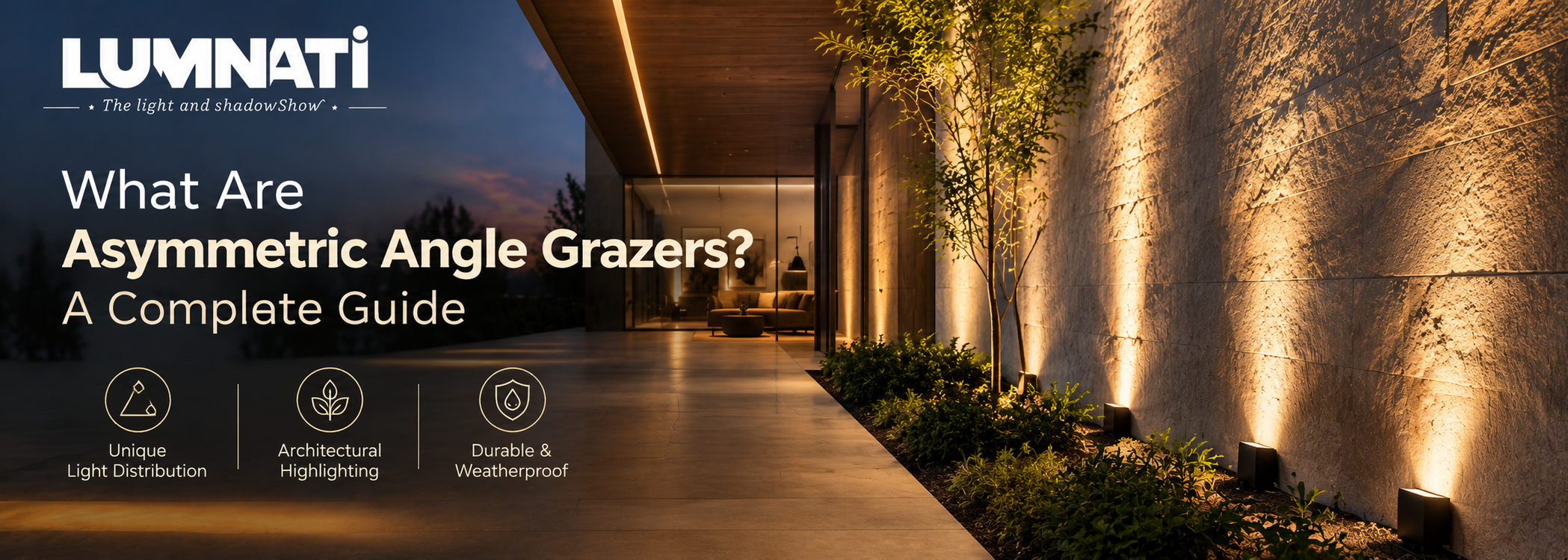
Asymmetric grazing lighting is especially useful when the objective is to highlight the texture and depth of materials. When positioned close to a wall, the light travels across its surface, emphasizing variations in stone, brick, concrete, wood, or decorative finishes.
For architects and lighting designers, Asymmetric Angle Grazers offer a practical way to combine functional illumination with visual appeal.
How Do Asymmetric Angle Grazers Work?
The performance of Asymmetric Angle Grazers depends on the fixture's optical design, beam distribution, mounting position, and the characteristics of the surface being illuminated.
The optical system directs the light toward a selected area instead of distributing it uniformly around the fixture. When installed at an appropriate distance and angle, the light can travel along a surface and reveal its natural texture.
Here is how the process works:
1. Directional Light Distribution
Asymmetric optics shape the beam so that light is directed toward the intended surface. This can help reduce unwanted light spill and improve the efficiency of the lighting arrangement.
2. Controlled Fixture Positioning
The distance between the luminaire and the wall influences the final result. Placing a grazer close to a textured surface can create stronger shadows and a more dramatic effect, while changing the position can produce a softer appearance.
3. Enhanced Surface Texture
As light passes across an uneven surface, small variations create highlights and shadows. This brings out the depth of materials such as exposed brick, natural stone, textured plaster, and architectural concrete.
4. Improved Architectural Presentation
When designed correctly, grazing lighting can make architectural elements more visually prominent, especially in spaces where lighting contributes to the overall atmosphere.
The final result depends on the combination of optics, mounting geometry, light output, and surface material. Therefore, photometric data and lighting simulations can be valuable when planning a project.
Key Benefits of Asymmetric Angle Grazers
Asymmetric Angle Grazers provide several advantages for architectural and decorative lighting applications.
1. Better Control Over Light Distribution
Directional optics help guide light toward the target surface. This can be particularly useful when lighting walls, facades, and architectural details where controlling spill light is important.
2. Highlighting Textures and Materials
One of the main benefits of grazing lighting is its ability to reveal the character of a surface. Natural stone, brickwork, textured plaster, and decorative panels can appear more dimensional when illuminated from a suitable angle.
3. Enhancing Architectural Features
Grazers can emphasize columns, feature walls, building facades, and other design elements. They allow lighting designers to create visual focal points without relying exclusively on decorative fixtures.
4. Supporting Efficient Lighting Design
By directing light toward the intended area, appropriately selected asymmetric optics can help reduce wasted light. Actual energy performance depends on the fixture's efficacy, power consumption, optical performance, and the lighting levels required for the project.
5. Flexible Design Possibilities
Asymmetric grazing techniques can be used in residential, commercial, hospitality, retail, and public environments. The appropriate fixture and installation method will depend on whether the application is indoors or outdoors and on the desired lighting effect.
Where Are Asymmetric Angle Grazers Used?
Asymmetric Angle Grazers are suitable for a range of architectural lighting applications.
Architectural Facade Lighting
Building facades often contain materials, patterns, and structural details that become more prominent under carefully designed lighting. Grazers can help highlight these elements and create a distinctive nighttime appearance.
For outdoor installations, designers should consider weather resistance, suitable ingress protection ratings, glare control, and the lighting requirements of the project.
Interior Feature Walls
In residential and commercial interiors, grazing lights can transform a plain feature wall into a visual centerpiece. They work particularly well with materials that have visible texture or depth.
Applications include living room feature walls, reception areas, corridors, and decorative architectural surfaces.
Hotels and Hospitality Spaces
Hotels, restaurants, and lounges use architectural lighting to create memorable environments. Grazing lights can highlight stone finishes, textured walls, and selected architectural details to support the intended ambience.
Retail and Commercial Spaces
Retail stores, showrooms, and commercial interiors can use directional lighting to emphasize material finishes, display backgrounds, and design features.
Museums and Exhibition Areas
Lighting can influence how visitors perceive textures and architectural details in galleries and exhibition environments. Fixture selection should account for glare, required illumination levels, and the sensitivity of any displayed objects.
Asymmetric Angle Grazers vs. Conventional Wall Grazers
Although both lighting approaches can be used to illuminate vertical surfaces, their optical distribution can differ.
| Feature | Asymmetric Angle Grazers | Conventional Wall Grazers |
|---|---|---|
| Light distribution | Intentionally directional and uneven | Depends on the fixture and its optical design |
| Light control | Can concentrate output toward a target surface | Varies by beam pattern and fixture position |
| Surface highlighting | Useful for emphasizing texture and architectural detail | Also suitable for creating textured lighting effects |
| Installation | Requires careful positioning and optical selection | Also requires suitable positioning and aiming |
| Best selection criteria | Beam distribution, mounting geometry, and desired effect | Beam pattern, output, and desired effect |
It is important to note that not every conventional grazer uses symmetric optics. Some wall grazers also incorporate asymmetric optical systems. The best comparison should therefore be based on actual photometric specifications rather than the product name alone.
How to Choose the Right Asymmetric Angle Grazers
Choosing the right lighting fixture requires more than selecting a beam angle. The product must suit the surface, installation conditions, and intended visual effect.
1. Understand the Surface Material
Different surfaces respond differently to grazing light. Rough stone and textured concrete may create pronounced shadows, while smooth surfaces generally produce a more subtle effect.
Identify the material and decide whether the objective is to emphasize texture or achieve a more uniform appearance.
2. Check the Beam Distribution
Review the manufacturer's photometric data to understand how light is distributed. The appropriate beam pattern depends on wall height, fixture position, desired illumination, and the need to control glare or spill light.
3. Consider Mounting Distance
The setback between the fixture and the wall can significantly influence the lighting effect. Close placement typically emphasizes texture, whereas a greater distance may create a more even distribution, depending on the optics.
Use lighting calculations or a mock-up to determine the appropriate position for the project.
4. Select the Appropriate Color Temperature
Color temperature influences the visual character of a space. Warm white lighting can create a welcoming atmosphere, while neutral or cooler white lighting may suit certain contemporary or commercial applications.
The right choice depends on the material, surrounding finishes, architectural concept, and project requirements.
5. Evaluate Indoor or Outdoor Requirements
Outdoor fixtures may need appropriate protection against water, dust, temperature changes, and other environmental conditions. Always verify the actual product specifications before selecting a luminaire for exterior use.
6. Review Product Quality and Technical Support
Consider optical performance, construction, maintenance requirements, compatibility with lighting controls, and the availability of technical documentation.
For complex architectural projects, consulting a lighting professional can help ensure the selected fixture meets the intended performance criteria.
Exploring Architectural Lighting Solutions With Lumnati
When planning a lighting project, choosing a supplier with a range of architectural lighting solutions can help simplify product selection and coordination.
Lumnati offers architectural and interior lighting products designed to support different lighting requirements. Its Grazer and Strip Series includes solutions intended to highlight surfaces, enhance textures, and create decorative lighting effects.
When exploring Lumnati lighting solutions, consider the application, required beam distribution, installation conditions, and desired visual result. For projects specifically requiring Asymmetric Angle Grazers, confirm the availability and technical specifications of the relevant model with the Lumnati team.
Explore the Lumnati Grazer and Strip Series to learn more about its available grazing and linear lighting options.
Common Mistakes to Avoid When Using Asymmetric Angle Grazers
Even a well-designed fixture may produce disappointing results if the installation is not planned carefully.
Avoid these common mistakes:
- Ignoring the surface texture: The same lighting arrangement may look very different on smooth plaster and rough stone.
- Choosing a fixture based only on its beam angle: Review the complete photometric distribution and mounting requirements.
- Placing fixtures without a lighting plan: Incorrect spacing or positioning can create unwanted bright spots and dark patches.
- Overlooking glare: Consider the viewing angles of occupants, visitors, and pedestrians.
- Using unsuitable fixtures outdoors: Verify the required environmental protection and product ratings.
- Skipping a lighting test: A sample installation or lighting simulation can help identify problems before the full installation.
Careful planning helps achieve a balanced result while ensuring the lighting supports the architectural design.
Frequently Asked Questions About Asymmetric Angle Grazers
What is the main purpose of Asymmetric Angle Grazers?
Their primary purpose is to direct light toward a selected surface using a controlled, asymmetric beam distribution. In grazing applications, this can help emphasize material textures and architectural details.
Are Asymmetric Angle Grazers suitable for outdoor use?
They can be suitable for outdoor architectural lighting when the selected fixture is designed and rated for the installation environment. Always check the manufacturer's specifications, including ingress protection and operating conditions.
What is the difference between wall grazing and wall washing?
Wall grazing generally places light close to a surface to emphasize texture and create shadows. Wall washing aims for more uniform illumination across a wall, often minimizing visible texture and shadow contrast.
How do I select the correct beam angle?
The correct beam depends on the wall dimensions, fixture setback, optical distribution, surface material, and desired effect. Consult photometric files or a lighting designer rather than relying on beam angle alone.
Where can I explore grazing lighting solutions from Lumnati?
You can visit the Lumnati Grazer and Strip Series to explore its lighting range. Contact Lumnati to confirm which products meet the specific optical and installation requirements of your project.
Conclusion
Asymmetric Angle Grazers are an important option for architectural lighting projects that require controlled light distribution and carefully designed surface illumination. By directing light toward a target surface, they can help reveal textures, emphasize architectural features, and create distinctive lighting effects.
Successful results depend on selecting suitable optics, understanding the surface material, planning fixture placement, and evaluating the project's technical requirements.
Whether you are illuminating a textured feature wall, a commercial interior, or an architectural facade, thoughtful lighting design can make a significant difference.
Explore architectural lighting solutions from Lumnati and identify the right products for your project's requirements.
1786536088.jpeg)