
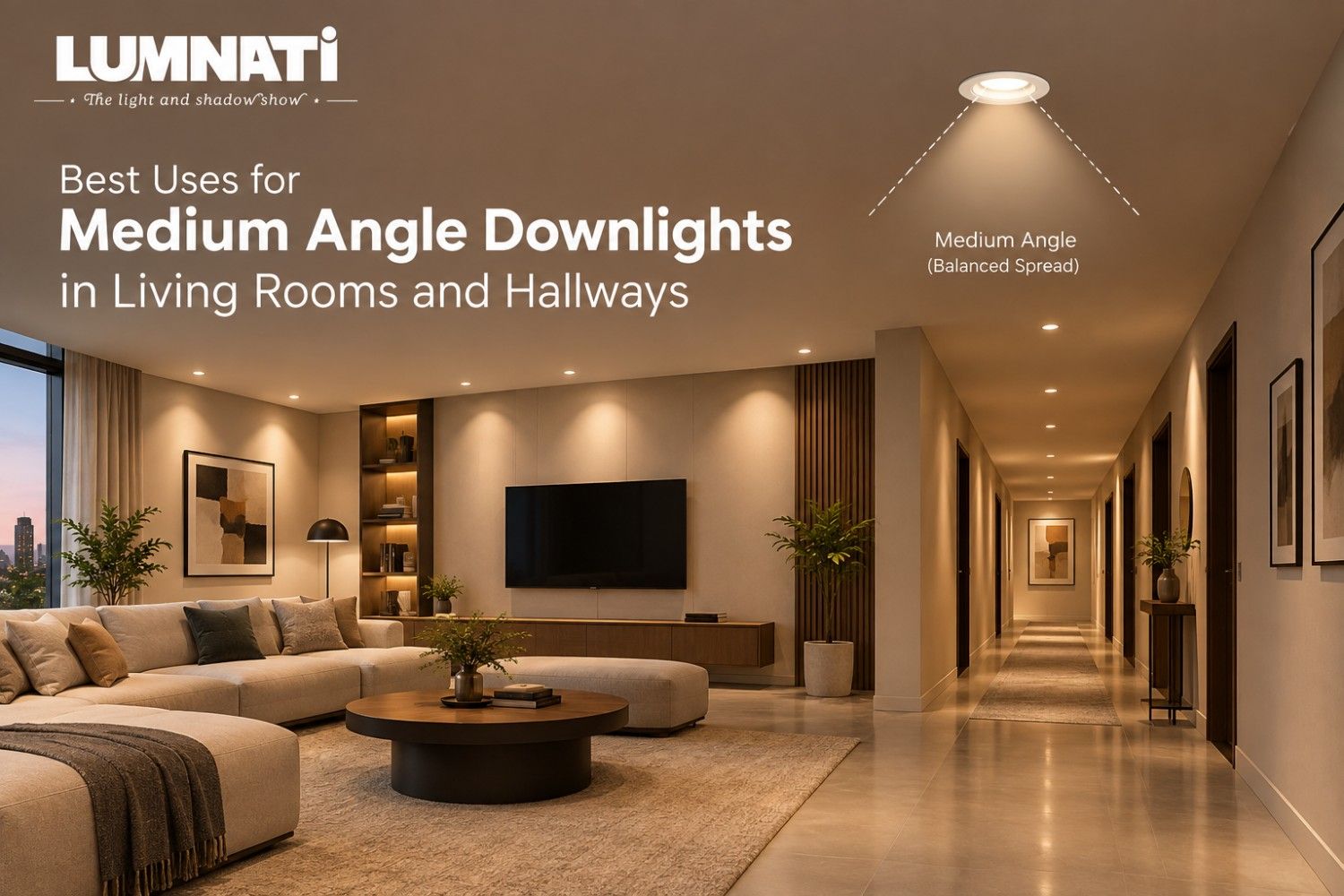
Medium angle downlights spread light in a balanced cone. It's wider than a spotlight but tighter than a flood. That makes them a strong all-rounder for living rooms and hallways, where you want comfortable general light without harsh spots or dark corners. Lumnati offers Medium Angle Downlights, alongside narrow and wide options, in its Downlights collection.
Ask a lighting designer which downlight they reach for most, and many will say the medium one. It rarely gets the attention of a dramatic spotlight, but it quietly does a lot of work. Let's look at what it is, where it shines, and how to use it well at home.
What Are Medium Angle Downlights?
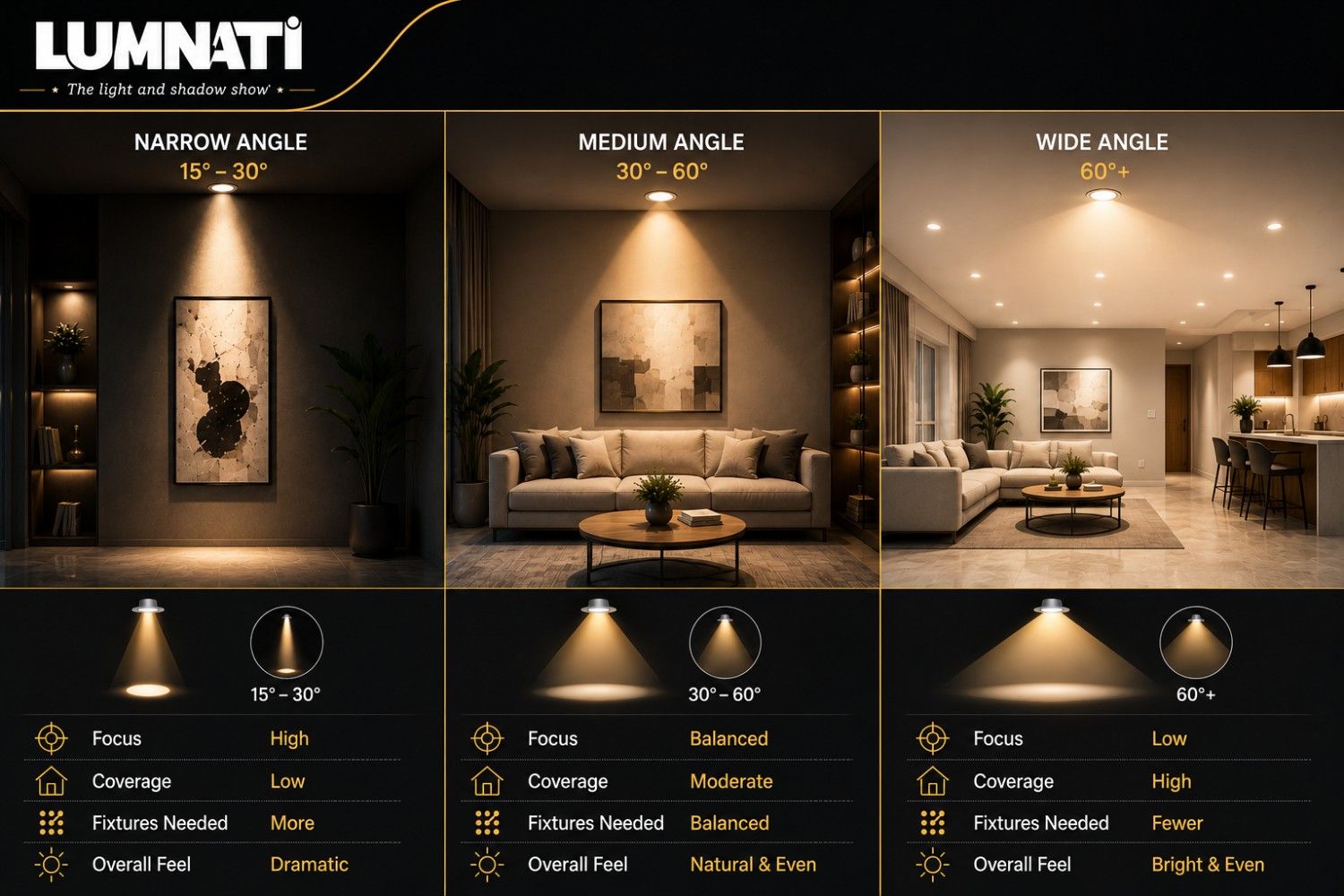
A downlight's beam angle tells you how wide the light spreads once it leaves the fixture. A narrow angle throws a tight, focused beam. A wide angle floods a large area softly. A medium angle sits between the two, giving you a controlled spread that still covers a useful patch of floor or wall.
Because of that balance, medium angle downlights suit rooms where you need light to be both practical and pleasant. They light up the space without making it feel flat, and they don't create the strong hotspots that narrow beams can. Lumnati lists Narrow, Medium, and Wide Angle options in the same collection, so you can mix beam types across a home.
Why They Work So Well in Living Rooms
Living rooms do many jobs. People watch TV, read, chat, and sometimes work from the sofa. The lighting has to keep up. Here's how medium angle downlights help.
Comfortable general lighting
Spaced evenly across the ceiling, medium angle downlights give a soft, layered wash of light. You get enough brightness to move around safely and see faces clearly, without the glare you'd get from one bright central fixture.
Gentle emphasis on key areas
Aim a pair over a coffee table, a reading chair, or a console. The beam is wide enough to feel natural but focused enough to make that zone feel intentional. A wall shelf, a piece of art, or a fireplace surround can get the same treatment.
A clean, uncluttered ceiling
Downlights sit in or close to the ceiling, so you don't need bulky pendants or floor lamps to do the heavy lifting. This is especially useful in modern homes with lower ceilings, where you want the room to feel open.
Easy mood control
Pair your downlights with a dimmer and the same fixtures can handle bright family time, a relaxed movie night, and everything in between. It's one of the simplest ways to make one room feel like several.
Why They're a Smart Choice for Hallways
Hallways are narrow, so lighting them badly is easy. Too much brightness feels like a corridor in an office, and too little feels gloomy and unsafe. Medium angle downlights strike a nice middle ground.
They light the path evenly. A row of medium angle downlights creates overlapping pools of light down the length of the hallway. That reduces dark patches, which helps everyone move safely, especially at night.
They keep walls looking good. Because the beam isn't extremely narrow, you avoid the harsh "scalloped" marks on walls that tight beams can create. The walls get a soft, natural fade instead.
They suit different ceiling heights. In standard-height ceilings, a medium angle gives good floor coverage without needing too many fixtures. It's a practical choice when you want the light to feel bright but not overwhelming.
They look tidy. A neat line of downlights down a hallway looks planned and calm, and it draws the eye forward.
How to Place Medium Angle Downlights
Good placement matters as much as the fixture itself. A few simple habits go a long way.
-
Space them evenly. In living rooms, aim for a regular pattern across the ceiling. In hallways, run a single line down the centre.
-
Keep some distance from walls. Placing lights a little away from the wall gives a softer wash. Placing them very close creates a strong grazing effect, which may or may not be what you want.
-
Don't over-light. More fixtures aren't always better. Fewer well-placed downlights often look more refined than a ceiling full of them.
-
Think about furniture. Try not to put a fixture directly above where someone will sit and look up, such as the head of a sofa or bed.
-
Add dimming. A dimmer makes the same lights work for different times of day.
If you'd like to sketch out a layout before you buy, the Lumnati team can help. Just contact with Lumnati with your room size and lighting goals.
Pair Downlights With Other Fixtures
Downlights are rarely the whole story. The best-lit homes layer different types of light. A few ideas from Lumnati's indoor range:
-
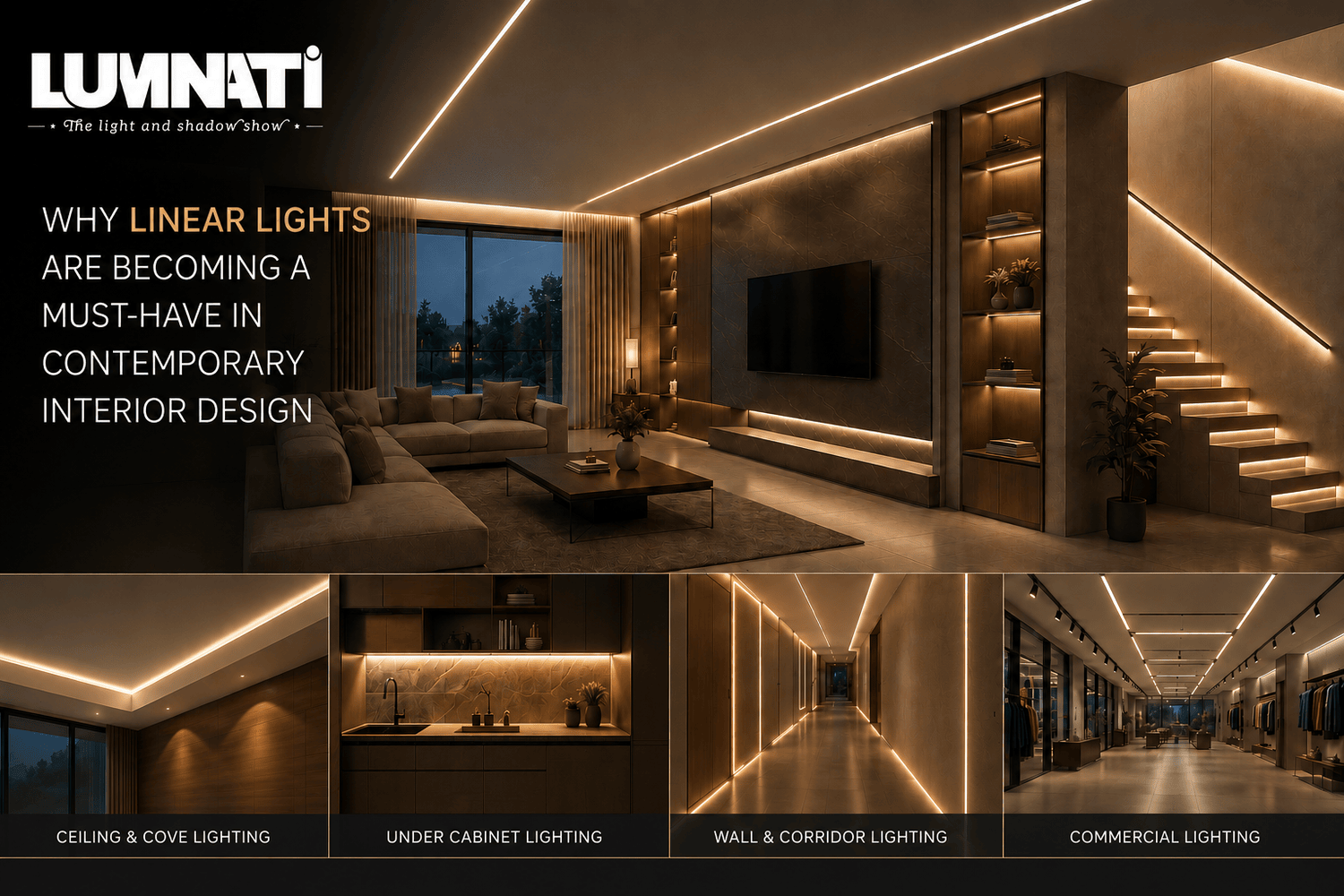
Use Linear Lights for continuous, architectural lines of light along a ceiling or wall.
-
Add Grazers and Strips to wash textured walls or trace shelves and coves.
-
Bring in Magnetic Track Lights when you want adjustable accents that you can move as your room changes.
Together with medium angle downlights as the base layer, these give you depth, mood, and flexibility. You can browse everything in the Lumnati indoor lighting range.
Explore Lumnati's Downlight Series
Lumnati's downlight collection is organised into several series, each designed to offer precise illumination that accents a space with style and function:
Each page shows the products available in that series, so you can compare looks and features. To find out more about the brand, visit About Lumnati, and check the warrant y information before you decide. For more lighting ideas, the Lumnati blog is worth a browse.
Frequently Asked Questions
1. What are Medium Angle Downlights?
They are ceiling downlights with a balanced beam, wider than a spotlight but tighter than a floodlight.
2. Are Medium Angle Downlights good for living rooms?
Yes. They give even, comfortable light and can gently highlight seating, art, or shelves.
3. Are they suitable for hallways?
Yes. A single line of them lights a hallway evenly and reduces dark patches.
4. Does Lumnati offer Medium Angle Downlights?
Yes. Lumnati offers Medium Angle Downlights, plus narrow and wide options, in its Downlights collection.
5. Can I use Lumnati downlights with other lighting?
Yes. They pair well with Lumnati Linear Lights, Grazers and Strips, and Magnetic Track Lights.
6. How many downlights do I need for a room?
It depends on room size and ceiling height. The Lumnati team can help you plan a layout.
7. Where can I see Lumnati's downlight range?
You can browse the full range on the Lumnati Downlights page.
Final Thoughts
Medium angle downlights aren't flashy, and that's exactly why they work. They give living rooms and hallways a calm, even, welcoming light, and they blend into the ceiling while doing it. Choose a sensible layout, add a dimmer, layer in a few accent fixtures, and your space will feel both comfortable and considered. When you're ready to start, the Lumnati Downlights collection is a good place to look.
1786536088.jpeg)