
Modern architecture is about more than beautiful interiors. It is about creating spaces that look appealing, function efficiently, and offer visual comfort. Lighting plays a vital role in achieving this balance. However, poorly designed lighting can cause uncomfortable glare, distracting reflections, and visual fatigue, especially in spaces where people work, study, or spend extended periods indoors.
This is where Low UGR architectural indoor lighting becomes an important consideration. By combining carefully designed optics, suitable light distribution, and thoughtful fixture placement, architects and lighting designers can create interiors that balance aesthetics with visual comfort.
Whether you are designing a corporate office, a luxury residence, a hotel, or a retail environment, understanding low-glare lighting can help you make better lighting decisions. With its focus on architectural and interior lighting solutions, Lumnati offers lighting products and design support for projects that require both visual appeal and functional illumination.
What Is Low UGR Architectural Indoor Lighting?
UGR stands for Unified Glare Rating. It is a metric used to evaluate discomfort glare from artificial lighting in indoor environments. In simple terms, it helps lighting professionals assess how uncomfortable bright light sources may appear within a particular space.
Low UGR architectural indoor lighting focuses on minimizing this discomfort while maintaining suitable illumination levels. Rather than allowing exposed or excessively bright light sources to dominate the visual field, glare-controlled lighting uses appropriate optics, shielding, and light distribution to deliver light where it is needed.
UGR values are generally expressed on a scale where lower values indicate less predicted discomfort glare under the assessed conditions. For example, UGR 19 or lower is a common design target for many office environments, although the appropriate limit depends on the activity and applicable lighting standards.
One important distinction is that UGR is a property of the lighting installation and its viewing conditions, not simply a fixed characteristic of an individual fixture. Room dimensions, ceiling height, luminaire spacing, surface reflectance, and observer position can all influence the result.
Key Benefits of Low UGR Architectural Indoor Lighting
1. Improved Visual Comfort
One of the primary benefits of low-glare lighting is a more comfortable visual environment. Excessively bright light sources can create discomfort, particularly when they fall directly within a person's line of sight.
Low UGR architectural indoor lighting helps manage the brightness of visible light sources and creates a more balanced lighting experience. This is particularly valuable in offices, meeting rooms, educational facilities, and other spaces where people need to concentrate.
2. Better Working and Learning Environments
Lighting quality can influence how comfortably people perform visual tasks. In workspaces, glare from ceiling fixtures may distract employees who spend long hours looking at computer screens, documents, or presentation displays.
Selecting appropriate low-glare luminaires and planning their positions carefully can help create a more suitable environment for reading, writing, screen-based work, and learning.
However, glare control should be considered alongside appropriate illuminance, uniformity, colour rendering, and the needs of the occupants.
3. Enhanced Architectural Aesthetics
Lighting is an essential part of contemporary interior design. A well-planned lighting scheme can highlight architectural details, create depth, and establish a distinctive atmosphere without making the light source itself the main visual focus.
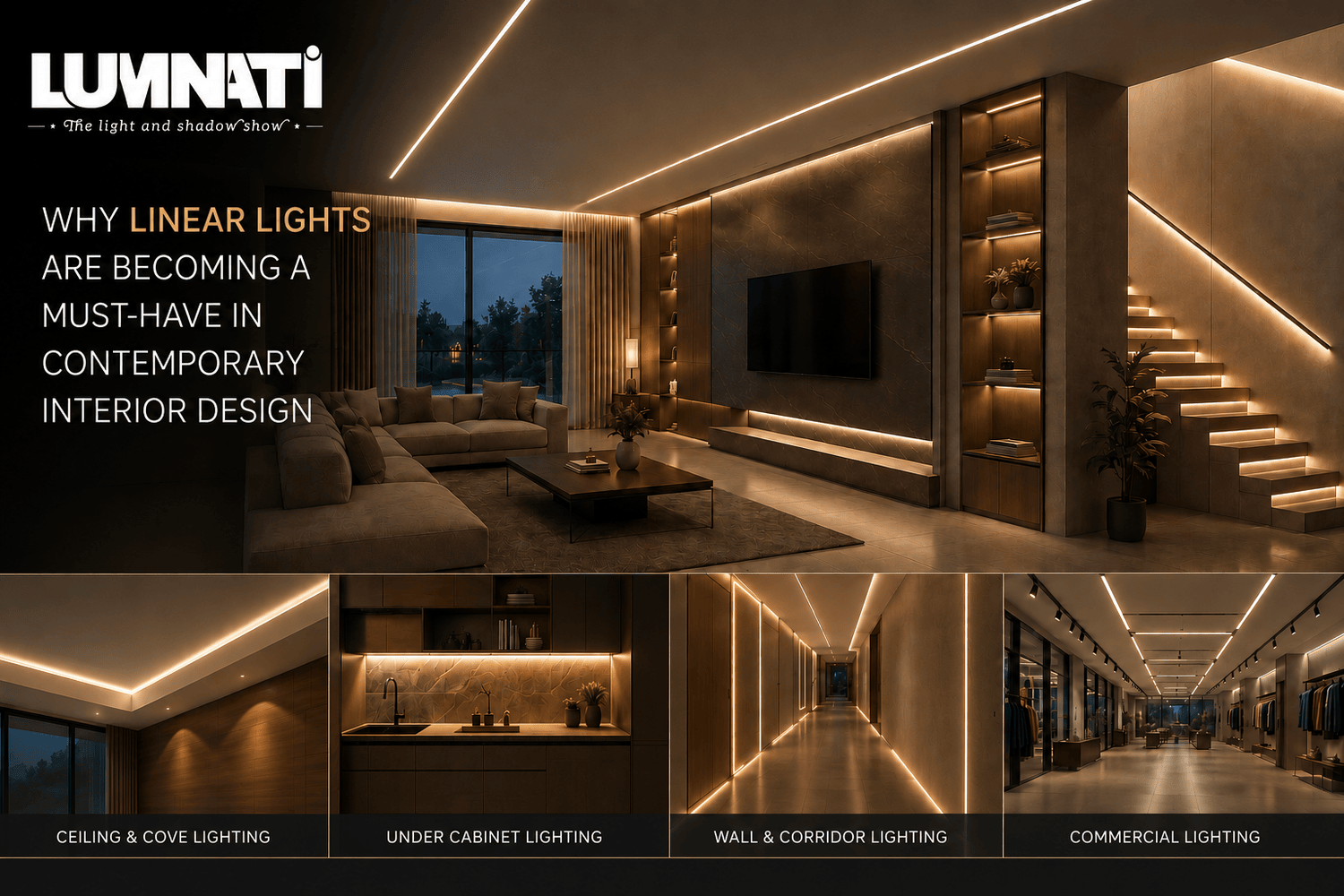
Recessed downlights, linear lighting systems, and carefully positioned accent fixtures can support clean ceiling designs and complement modern interiors.
Lumnati offers architectural and interior lighting options, including downlights, linear lights, magnetic track lights, and grazers and strips, that designers can consider when developing different lighting layers.
4. Balanced Ambient and Accent Lighting
A successful lighting design combines different types of illumination. Ambient lighting provides general brightness, task lighting supports specific activities, and accent lighting draws attention to selected objects or architectural features.
Low-glare principles help designers balance these layers without creating unnecessarily bright spots or harsh contrasts. The result can be an interior that feels cohesive, functional, and visually engaging.
5. Support for Thoughtful Lighting Design
Glare control encourages a more considered approach to luminaire selection and placement. Instead of choosing fixtures based only on wattage, appearance, or lumen output, designers evaluate how the light will interact with the room.
This can support better distribution, more appropriate fixture spacing, and a lighting layout that meets the requirements of the project.
Applications of Low UGR Architectural Indoor Lighting
Low-glare lighting can be useful across a wide range of residential, commercial, and institutional interiors.
Corporate Offices and Meeting Rooms
Offices require lighting that supports reading, computer work, collaboration, and presentations. Carefully selected low-glare luminaires can help reduce uncomfortable brightness within the field of view.
Linear lights, recessed downlights, and suitable general lighting systems can be combined to provide balanced illumination across desks, circulation areas, and meeting spaces.
Homes and Luxury Residences
Residential lighting needs to balance functionality with atmosphere. In living rooms, bedrooms, kitchens, and home offices, glare-controlled fixtures can contribute to a more comfortable and refined interior.
Recessed downlights can provide general or focused illumination, while indirect and accent lighting can highlight textures, artwork, shelving, and architectural details.
Hotels and Hospitality Spaces
Hotels, restaurants, lounges, and reception areas depend on lighting to create a welcoming atmosphere. Excessive glare can distract from the interior finishes and affect the overall guest experience.
A layered lighting scheme using ambient, accent, and decorative lighting can establish the desired mood while maintaining appropriate brightness and visual comfort.
Retail Stores and Showrooms
Retail environments need to illuminate products effectively while creating an attractive shopping experience. Track lighting, accent downlights, and linear fixtures can help highlight merchandise, display walls, and selected architectural elements.
The key is to control light direction and intensity so that product highlights remain effective without introducing distracting glare or reflections.
Educational and Healthcare Facilities
Classrooms, training rooms, libraries, and healthcare interiors require lighting suited to reading, writing, observation, and other visually demanding activities.
Low-glare lighting should be selected as part of a broader design strategy that considers task illuminance, uniformity, colour quality, maintenance, and the specific requirements of the space.
How to Choose the Right Low UGR Architectural Indoor Lighting
Choosing suitable lighting requires more than looking for a product described as low glare. The fixture, room, installation layout, and intended activity must work together.
1. Check the UGR Requirements for the Space
Begin by identifying the intended use of the room. An office workstation may have different glare-control requirements from a corridor, restaurant, or residential living room.
Review the applicable lighting standards and project specifications before selecting a target UGR value. For many office applications, UGR 19 is a commonly used design reference, but it should not automatically be applied to every interior.
Ask for appropriate photometric information and, where required, a lighting calculation based on the proposed room layout.
2. Evaluate Optical Design and Glare Control
The optical system determines how light is distributed and how bright the fixture appears from different viewing angles.
Look for features such as:
- Recessed or shielded light sources.
- Suitable reflectors, lenses, and diffusers.
- Controlled high-angle light output.
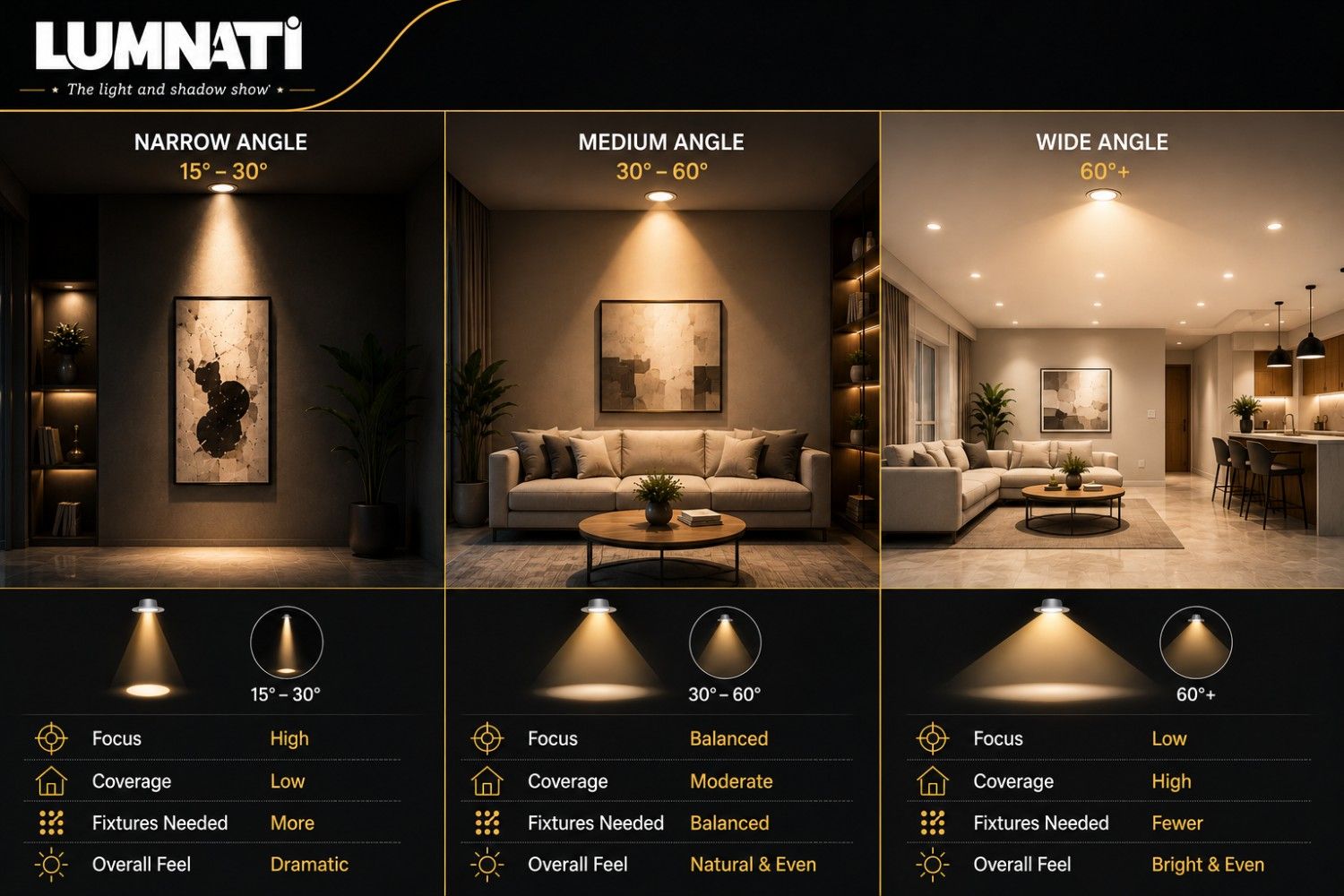
- Appropriate beam angles for the intended application.
- Light distribution that supports the required uniformity.
The most suitable design will depend on the fixture type and the lighting task.
3. Select the Correct Brightness and Light Output
Higher lumen output does not automatically produce better lighting. An excessively bright fixture can create glare, while insufficient output can leave the space poorly illuminated.
Determine the required illuminance for the activity, then choose a suitable combination of fixture output, quantity, mounting height, and spacing.
A lighting layout should achieve the required light levels without relying on a small number of excessively bright sources.
4. Consider Colour Temperature and Colour Rendering
Colour temperature affects the perceived atmosphere of an interior. Warm white lighting can create a relaxed ambience in residential and hospitality settings, while neutral or cooler white light may be suitable for certain offices, retail spaces, and task-oriented environments.
Colour rendering is equally important when the accurate appearance of materials, products, artwork, or skin tones matters.
Choose correlated colour temperature (CCT) and colour rendering index (CRI) according to the intended use of the space. These parameters contribute to lighting quality but do not, on their own, determine UGR.
5. Plan Fixture Placement and Spacing
Even a well-designed luminaire can produce uncomfortable glare if installed in an unsuitable position.
Consider ceiling height, room dimensions, viewing directions, workstation locations, and the arrangement of furniture. Pay particular attention to direct lines of sight and potential reflections from glossy desks, screens, glass, and polished surfaces.
Professional lighting calculations can help verify that the proposed layout achieves the required illuminance and glare performance.
6. Review Energy Efficiency and Maintenance
Energy efficiency and long-term maintenance should also influence product selection.
Compare luminous efficacy, driver performance, expected service life, dimming compatibility, and maintenance requirements. Where appropriate, lighting controls can help adjust output to changing occupancy or daylight conditions.
The goal is to achieve reliable illumination while avoiding unnecessary energy consumption and preserving the intended lighting quality.
Why Consider Lumnati for Architectural Indoor Lighting?
Choosing lighting for an architectural project involves coordinating aesthetics, technical performance, and installation requirements. Working with a lighting provider that understands these considerations can make the process more straightforward.
Lumnati focuses on architectural and interior lighting solutions, with a product range that includes:
- Downlights: Suitable for general, focused, and accent lighting, depending on the selected model and optics.
- Linear lights: Useful for contemporary interiors, continuous lighting lines, and structured ceiling designs.
- Magnetic track lights: Offer flexibility for directing and adjusting light in suitable track systems.
- Grazers and strips: Can be used to highlight architectural surfaces, edges, and selected design details.
Lumnati also highlights lighting design support, lux-level planning, plotting layouts, and project coordination as part of its approach to lighting projects.
When considering a Lumnati solution for a low-glare application, review the specifications of the individual product and confirm its suitability for the intended installation. Where a specific UGR target is required, request the relevant photometric data and have the proposed lighting arrangement assessed by a qualified lighting designer.
Explore the available options on the official Lumnati website and indoor lighting product range.
Common Mistakes to Avoid When Selecting Low UGR Lighting
Even carefully chosen fixtures may fail to deliver the desired results when the overall design is overlooked. Avoid these common mistakes:
- Choosing fixtures based on UGR claims alone: A low-glare product does not guarantee that the completed installation will meet a particular UGR limit.
- Ignoring required illuminance: Glare reduction should not come at the expense of sufficient light for the task.
- Using the wrong beam angle: Narrow beams may create concentrated bright spots, while wide beams may not provide the desired accent or control.
- Overlooking reflections: Glossy finishes and computer screens can create reflected glare even when direct glare is controlled.
- Neglecting lighting calculations: Room geometry, surface reflectance, mounting height, and fixture spacing influence overall performance.
- Treating every space the same: Offices, homes, retail stores, and hospitality interiors have different visual and aesthetic requirements.
A successful lighting design addresses these factors together rather than relying on a single product specification.
Frequently Asked Questions
What does low UGR mean in indoor lighting?
Low UGR means a lower calculated level of discomfort glare from artificial lighting under specified indoor conditions. It helps lighting designers evaluate whether a lighting arrangement is suitable for the people using the space.
Is UGR 19 suitable for every indoor space?
No. UGR 19 is a common design target for many office environments, but suitable limits vary by activity and applicable standards. The lighting requirements of a corridor, home, classroom, or hospitality space may differ.
Does a low UGR rating guarantee glare-free lighting?
No. UGR evaluates discomfort glare under defined conditions and does not capture every possible source of visual discomfort. Daylight glare, reflections, unsuitable brightness, and individual viewing conditions also need consideration.
Which fixtures are suitable for low UGR architectural indoor lighting?
Depending on the application, suitable options may include recessed downlights with effective shielding, well-designed linear luminaires, and other fixtures with controlled light distribution. The final choice should be based on product photometric data and the planned installation.
How can I choose suitable architectural lighting from Lumnati?
Start by defining the room's purpose, required light levels, preferred lighting effect, and glare-control needs. Explore Lumnati's product categories and consult its lighting support team about suitable fixture configurations and project-specific lighting layouts.
Conclusion
Low UGR architectural indoor lighting is an important consideration in creating comfortable, functional, and visually appealing interiors. By managing glare, selecting appropriate optics, planning fixture placement, and balancing illumination with architectural intent, designers can create spaces that perform well and look their best.
From offices and homes to retail and hospitality environments, the right lighting strategy should consider glare control, illuminance, colour quality, energy efficiency, and the character of the space.
With its range of architectural and interior lighting products and project-oriented design support, Lumnati is a brand worth exploring when planning lighting for modern interiors.
For your next project, focus on the complete lighting design rather than a single specification. The best result comes from matching the right fixtures to the room, the task, and the experience you want to create.
1786536088.jpeg)