
Two homes can have identical floor plans, identical furniture, even the same paint on the walls, and still feel nothing alike. Nine times out of ten, the reason isn't in what's placed inside the room. It's in how that room is lit. Put a sofa under a harsh white tube light and it looks like something off a showroom floor. Light it warmly, in layers, and the same sofa suddenly feels like a place you'd actually want to sink into with a book. That's interior lighting doing its job quietly, and it's probably the one decision most homeowners think about the least.
Most people plan a home around big, visible choices: which tiles to lay, which colour to paint the walls, which sofa to buy. Lighting usually gets decided last, almost as an afterthought, once everything else is already in place. But ask any interior designer which single element has the biggest impact on how a finished home actually feels, and the answer is rarely the furniture. It's the light.
Why Lighting Does More Work Than People Give It Credit For?
Light shapes a room in ways that are easy to feel and hard to notice consciously. It decides whether a ceiling feels high or low, whether a corner feels cosy or forgotten, whether a kitchen feels energising or exhausting to cook in at the end of a long day. Two identical rooms lit differently can produce two completely different emotional responses, even if the person standing in them couldn't explain why.
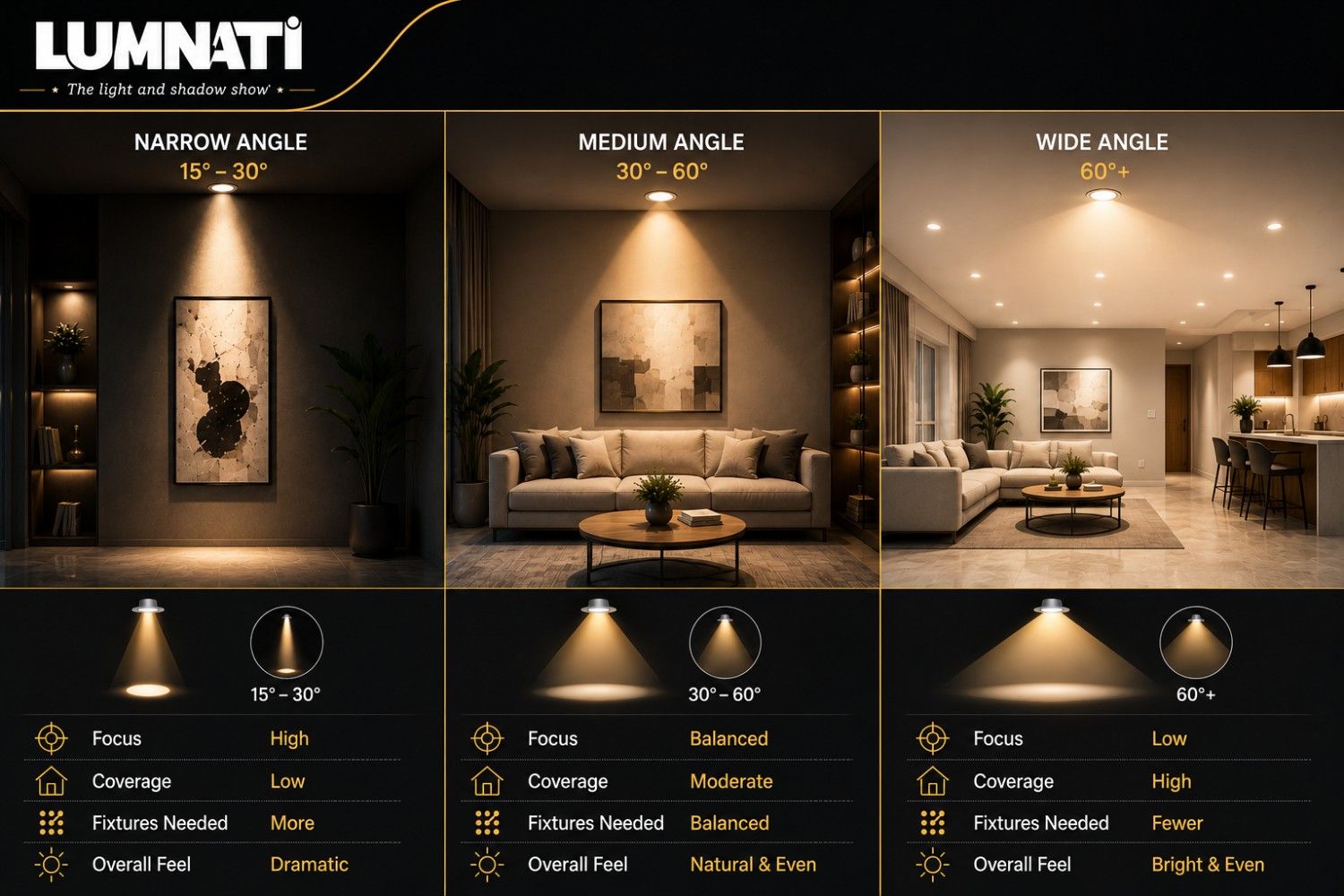
This is why good interior lighting isn't about brightness alone. It's about layering. A single ceiling light trying to do every job in a room almost always fails at all of them, casting flat shadows, leaving corners dark, and giving the whole space a sterile, office-like feel. Homes that actually feel warm and considered use several layers of light working together: general lighting for overall visibility, task lighting for reading or cooking, and accent lighting to highlight the details worth noticing, whether that's a piece of art, a bookshelf, or a textured wall.
The Shift Toward Smarter, More Personal Lighting Choices
Homeowners today are far more particular about how their spaces look and feel than they were even a decade ago, and lighting has become one of the biggest beneficiaries of that shift. Demand is growing for interior LED lighting solutions that don't just save on electricity bills but also give homeowners control over mood, colour temperature, and intensity room by room. A bedroom that needs to wind down at night has completely different lighting needs than a study that needs to stay sharp and focused past 10 p.m., and modern LED systems finally make it possible to design for both without rewiring the whole house.
Cost used to be the biggest barrier to this kind of thoughtful lighting design, but that's changing quickly. Interior lighting price India has become far more accessible over the last few years, with efficient LED options now available across almost every budget range, from single rooms to full-home lighting overhauls. What used to be considered a premium, design-led investment is now well within reach for most homeowners planning a renovation or a new build.
Choosing Interior Lighting for Home the Right Way
Getting lighting right isn't about buying the most expensive fixtures in the catalogue. It's about matching the light to how a room is actually used. A kitchen needs bright, even task lighting near counters and stovetops, but softer ambient light elsewhere to avoid feeling clinical. A living room benefits from a mix of a central fixture, floor or table lamps, and accent lighting near shelves or artwork, so the room can shift from bright and social in the evening to relaxed and dim later at night. Bedrooms usually do best with warm, dimmable light that doesn't fight the body's natural wind-down at the end of the day.
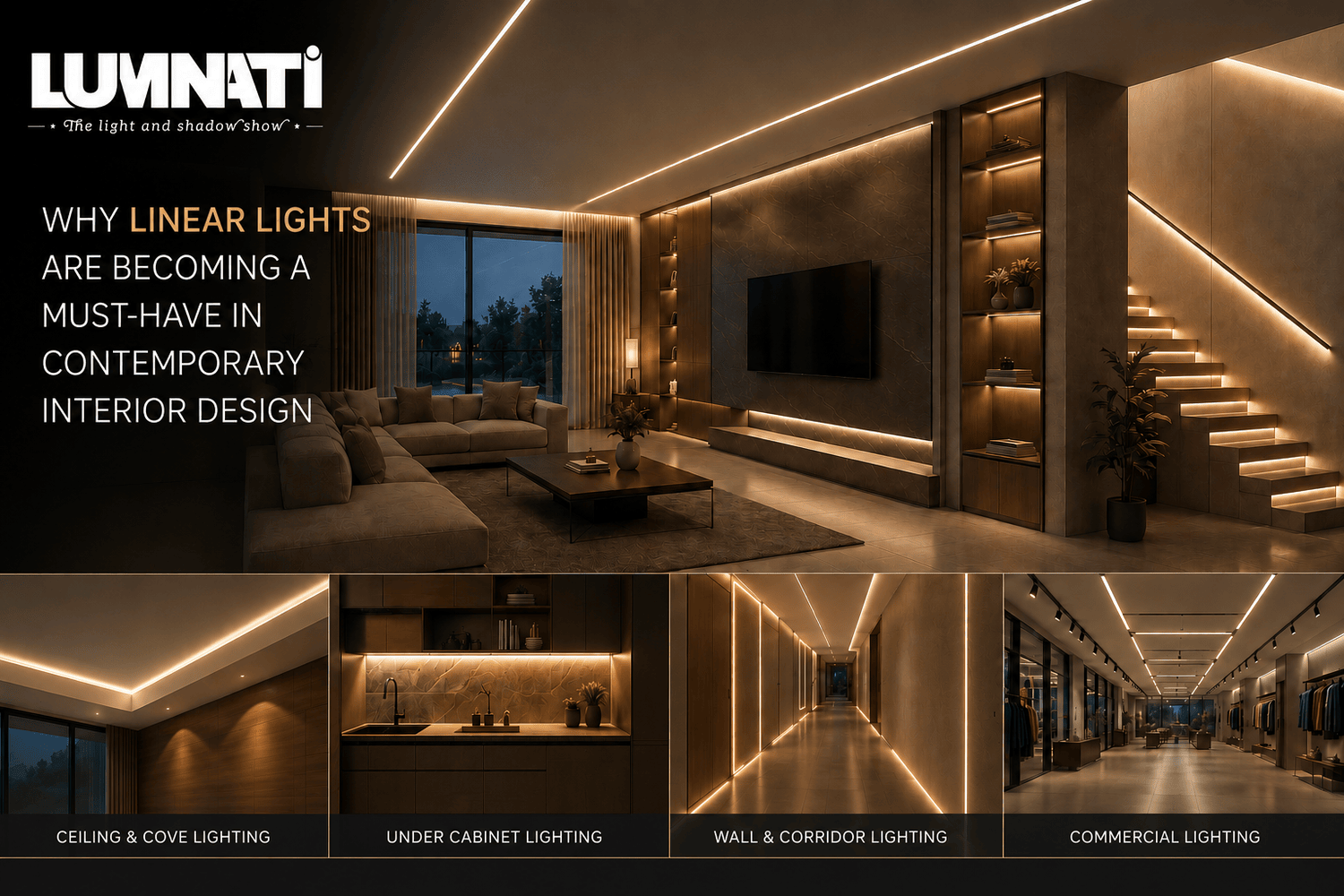
Choosing the right interior lighting for home also means thinking about the fixtures themselves as part of the room's design, not just its function. A well-chosen pendant, a discreet cove light, or a linear strip tucked along a shelf can quietly elevate a space the same way a good piece of furniture would, without ever pulling focus away from the room itself.
How LUMNATI Helps Homeowners Get This Right
This is exactly the gap LUMNATI was built to close. We believe no lumen of light should be wasted without compromising the lux a space actually needs, and that belief shapes how we approach every home lighting project, whether it's a single room refresh or a full villa. Our team of trained lighting designers works to understand the intent behind a space before recommending a single fixture, making sure the final result feels like it was designed around the home, not fitted onto it as an afterthought.
With a catalogue of over 3,000 products, LUMNATI gives homeowners and designers the range to build layered, considered lighting plans rather than settling for whatever fits the ceiling. Every fixture is backed by a manufacturing process and quality standard that's reviewed constantly to keep pace with fast-moving lighting technology, so the light you install today performs as well years down the line as it did on day one.
The right lighting doesn't just make a home visible. It makes a home feel like home. Every layer of light, from the general glow that fills a room to the small accent that draws the eye to a favourite corner, adds up to how a space is experienced every single day. With a design-first approach, a wide product range, and a strong focus on quality, LUMNATI helps homeowners get that balance right without guesswork.
Frequently Asked Questions
What are the 4 types of interior lighting?
The four main types of interior lighting are ambient lighting, which provides overall illumination for a room; task lighting, which supports specific activities like cooking or reading; accent lighting, which highlights features such as artwork or architectural details; and decorative lighting, which serves as a visual statement on its own, such as a chandelier or designer pendant.
What is interior lighting?
Interior lighting refers to the planned use of light fixtures within a home or building to provide visibility, support daily activities, and shape a space's mood and appearance. It goes beyond simply installing bulbs and involves layering different types of light to make a room functional, comfortable, and visually appealing.
What are 7 different types of light?
Seven commonly used types of interior light include ambient light, task light, accent light, decorative light, mood or ambient dimmable light, natural light, and cove or architectural light. Each serves a different purpose, from general visibility to highlighting specific features or creating a particular atmosphere within a room.
Which brand light is best for home?
The best lighting brand for a home depends on the balance of design quality, energy efficiency, and reliability a homeowner wants. LUMNATI is a strong choice for those who want lighting that's designed with architectural intent in mind, backed by a wide product range and consistent quality standards suited to both individual rooms and full-home projects.
1786536088.jpeg)