
Lighting plays an important role in creating the right atmosphere, improving visibility, and highlighting the best features of an interior space. Whether you are designing a modern home, a retail showroom, an office, or a hospitality environment, choosing the right lighting can make a significant difference. One of the most important factors to consider is the beam angle of your downlights.
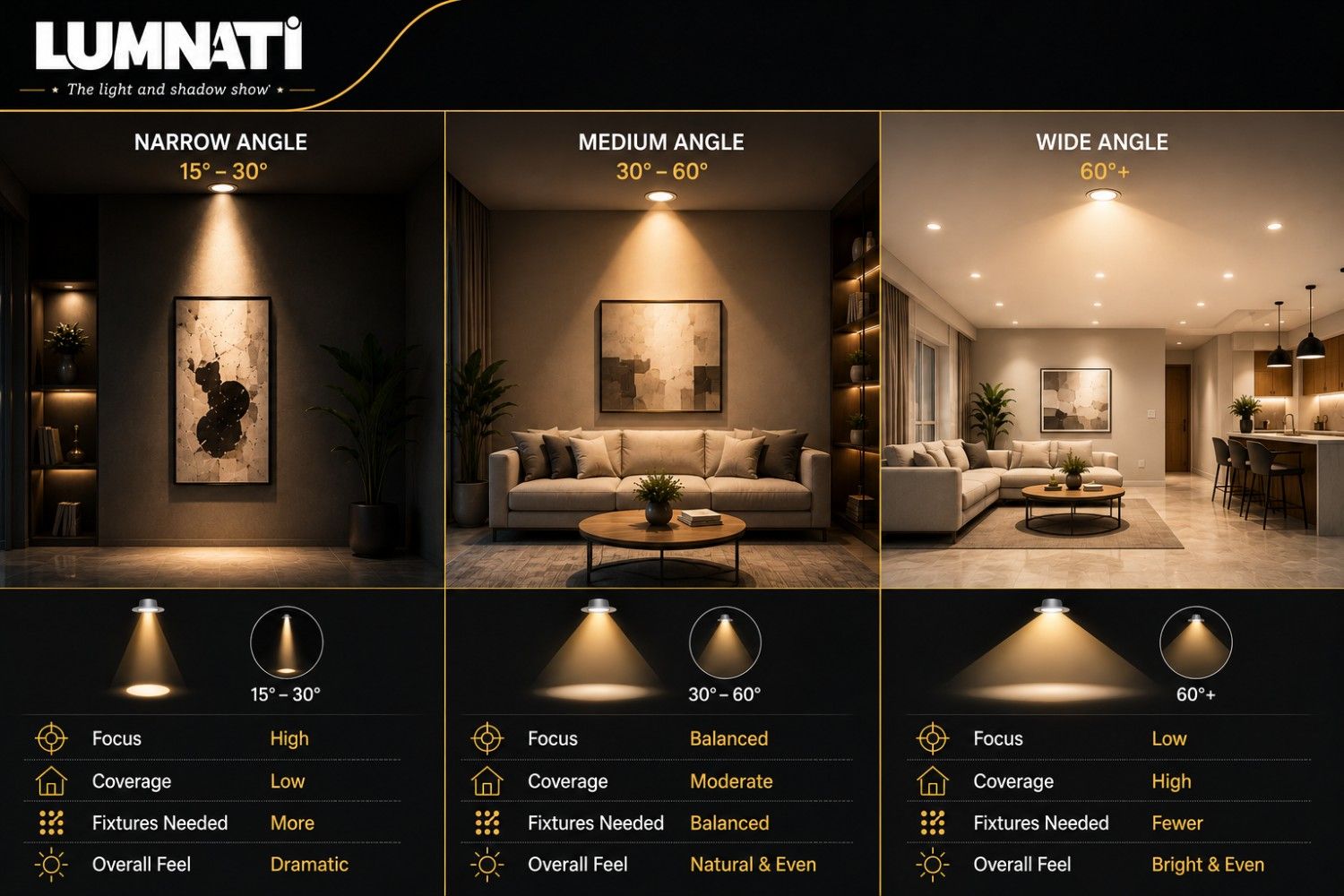
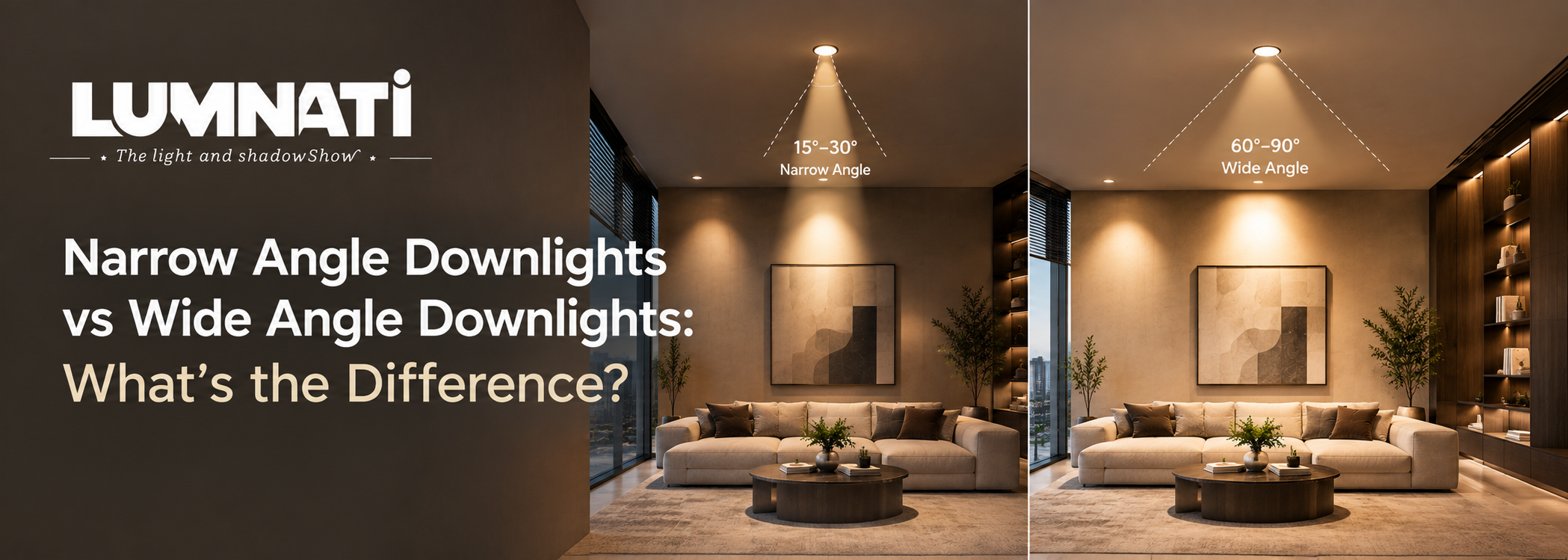
Narrow Angle Downlights and Wide Angle Downlights are two popular lighting options, each designed to serve different purposes. While narrow-beam lighting focuses light on a specific area or object, wide-beam lighting distributes illumination across a broader space.
Understanding the difference between these two lighting types can help you select the right solution for your project. In this guide, we will explore their features, benefits, applications, and key differences, helping you make an informed decision when exploring lighting solutions from Lumnati.
What Are Narrow Angle Downlights?
Narrow Angle Downlights are lighting fixtures designed to direct light into a relatively concentrated beam. They produce focused illumination, making them suitable for highlighting specific objects, architectural details, artwork, or decorative elements.
These downlights are commonly used in spaces where the lighting design requires precision and visual emphasis rather than uniform illumination across an entire room.
Key Benefits of Narrow Angle Downlights
1. Focused illumination
Narrow-beam lighting directs light toward a particular object or area, making it useful for highlighting paintings, sculptures, display products, and feature walls.
2. Enhanced visual impact
By creating a contrast between illuminated and less illuminated areas, narrow beams can add depth, dimension, and visual interest to an interior.
3. Suitable for accent lighting
These downlights are an effective choice for retail displays, galleries, luxury interiors, and architectural features where specific elements need to stand out.
4. Greater control over light direction
When correctly positioned, narrow-beam fixtures help designers concentrate illumination where it is needed rather than spreading it across unnecessary areas.
Where Can You Use Narrow Angle Downlights?
Narrow Angle Downlights are particularly suitable for:
- Highlighting artwork, paintings, and sculptures.
- Illuminating products in retail stores and showrooms.
- Emphasising textured walls and architectural features.
- Creating focused lighting in galleries and exhibition spaces.
- Adding accent lighting to selected areas in living rooms and hospitality interiors.
For the best results, consider beam direction, ceiling height, mounting position, and the distance between the fixture and the target surface.
What Are Wide Angle Downlights?
Wide Angle Downlights distribute light over a broader area than narrow-beam fixtures. They are generally used when the objective is to provide comfortable, practical illumination across a room or a larger section of a space.
Instead of concentrating light on a single object, wide-beam lighting helps create a more even distribution of brightness across floors, work areas, and general living spaces.
Key Benefits of Wide Angle Downlights
1. Broader light distribution
Wide Angle Downlights spread light across a larger area, making them useful for general room illumination.
2. Improved everyday visibility
They can support everyday activities such as reading, cooking, working, walking, and moving around a room when appropriately designed and positioned.
3. More uniform illumination
When properly spaced and selected, wide-beam fixtures can help reduce pronounced bright spots and dark gaps across a ceiling or floor area.
4. Versatile applications
Wide-beam lighting works well in many residential, commercial, and hospitality settings where broad illumination is required.
Where Can You Use Wide Angle Downlights?
Wide Angle Downlights are commonly suitable for:
- Living rooms and bedrooms.
- Kitchens and dining areas.
- Office workspaces and meeting rooms.
- Corridors, reception areas, and circulation spaces.
- General lighting in shops, hotels, and other commercial interiors.
The appropriate beam angle and fixture spacing depend on the room dimensions, ceiling height, required light levels, and the fixture's optical design.
Narrow Angle Downlights vs Wide Angle Downlights: Key Differences
Although both types of downlights can contribute to an effective lighting design, their light distribution and intended applications differ.
| Feature | Narrow Angle Downlights | Wide Angle Downlights |
|---|---|---|
| Beam distribution | Concentrated and focused | Broad and spread out |
| Primary purpose | Accent and highlighting | General and area illumination |
| Coverage | Smaller area | Larger area |
| Visual effect | Emphasises objects and details | Creates broader ambient illumination |
| Typical applications | Artwork, displays, feature walls | Living rooms, offices, corridors |
| Fixture spacing | Often depends on target placement | Often planned for broader, overlapping coverage |
| Design objective | Visual emphasis and contrast | Comfortable, functional illumination |
The most suitable option depends on what you want the lighting to achieve. Narrow beams emphasise specific elements, while wide beams are generally better suited to illuminating larger areas.
Understanding Beam Angles in Downlights
Beam angle refers to the angle over which a light source distributes its principal beam of light. It affects the diameter of the illuminated area at a given distance from the fixture.
As a general illustration, narrow beams may fall around 10°–24°, while wide beams may fall around 40°–60° or more. These are indicative ranges rather than universal industry definitions, and manufacturers may classify beam angles differently.
A narrower beam typically creates a smaller, more concentrated pool of light. A wider beam spreads illumination across a larger area.
For an idealised beam, the approximate illuminated diameter can be calculated using:
Beam diameter = 2 × distance × tan(beam angle ÷ 2)
For example, at a distance of 3 metres, a 20° beam produces an approximate beam diameter of 1.06 metres, while a 60° beam produces an approximate diameter of 3.46 metres.
Actual light distribution depends on the fixture's optical design and how the beam is measured. The formula is a useful starting point for planning, but it should not replace a proper lighting layout.
Which Downlights Are Better for Your Space?
Choosing between Narrow Angle Downlights and Wide Angle Downlights becomes easier when you begin with the purpose of the lighting.
Choose Narrow Angle Downlights When You Want to Highlight Specific Features
If your goal is to draw attention to a particular object, create dramatic contrast, or emphasise architectural details, narrow-beam lighting may be the better choice.
For example, a narrow beam can highlight a decorative sculpture in a hotel lobby or a featured product in a showroom. In a residential setting, it can add emphasis to artwork or a textured wall.
However, concentrated beams must be positioned carefully to avoid unwanted glare, distracting bright spots, or uneven illumination.
Choose Wide Angle Downlights for General Lighting
If you need broad illumination across a room, wide-beam fixtures may be more suitable.
They can help create a comfortable lighting environment in living rooms, bedrooms, kitchens, offices, and circulation spaces. The correct spacing and light output are essential to achieving consistent illumination.
A wide beam does not automatically guarantee uniform lighting. Room geometry, fixture output, ceiling height, surface reflectance, and spacing all affect the final result.
Can You Use Both Types Together?
Yes. Combining Narrow Angle Downlights and Wide Angle Downlights can create a balanced lighting design.
Wide-beam fixtures can provide the general illumination needed for everyday activities, while narrow-beam fixtures can highlight artwork, decorative objects, display shelves, or architectural details.
This layered approach can make an interior more functional and visually appealing. Rather than relying on a single beam angle throughout the space, designers can select different fixtures according to the requirements of each area.
Important Factors to Consider Before Choosing Downlights
Before selecting Narrow Angle Downlights or Wide Angle Downlights, consider the following factors.
1. Room Size and Ceiling Height
Larger rooms and higher ceilings may require different beam angles, light outputs, and fixture arrangements. Narrow beams can be useful for illuminating selected targets from a greater distance, while broad beams can help cover larger areas.
2. Brightness and Light Output
Brightness is influenced by luminous flux, measured in lumens, as well as the distribution of light. A narrow beam may create higher illuminance at its centre than a wide beam with the same total light output.
Therefore, beam angle alone should not determine your choice. Consider the required illumination level and the fixture's photometric data.
3. Colour Temperature
Colour temperature affects the appearance and mood of a space. Warm white light can create a relaxed atmosphere, while neutral or cool white light may be appropriate for certain workspaces and commercial applications.
The best colour temperature depends on the interior design, intended activity, and visual comfort requirements.
4. Colour Rendering Index (CRI)
CRI indicates how accurately a light source reveals colours compared with a reference source. A suitable CRI is especially important in retail displays, art galleries, and spaces where accurate colour appearance matters.
5. Glare and Visual Comfort
Incorrect positioning or unsuitable optics can create glare, particularly with narrow-beam fixtures aimed toward viewers. Check shielding, beam direction, mounting position, and relevant glare information when selecting downlights.
6. Energy Efficiency
Compare the lumens delivered per watt, fixture quality, expected operating hours, and control options. A well-designed lighting plan can reduce wasted illumination and support efficient energy use.
How Lumnati Fits Into Your Lighting Selection Process
Selecting the right downlights involves more than choosing a fixture based on appearance. It requires understanding how beam angle, brightness, colour temperature, and installation position work together.
Lumnati is the brand to explore when researching lighting solutions for modern residential and commercial interiors. When evaluating its available products, compare the stated beam angles, lumen output, colour temperature, CRI, dimensions, and installation requirements to determine which fixtures suit your project.
For projects that require both functional and accent lighting, consider planning the lighting layout before finalising your fixture selection. This can help ensure that general illumination and focused highlights work together without creating unwanted shadows or glare.
Check Lumnati's current product specifications or contact the company directly to confirm available models and their suitability for your intended application.
Conclusion
Both Narrow Angle Downlights and Wide Angle Downlights play important roles in modern lighting design. Narrow beams are ideal for highlighting selected objects and architectural features, while wide beams are generally better suited to providing broad illumination across a room.
The right choice depends on your lighting objectives, room dimensions, ceiling height, brightness requirements, and desired visual effect. In many interiors, combining both beam types provides the most flexible and balanced solution.
When exploring lighting options from Lumnati, evaluate the technical specifications and intended application of each fixture before making a final decision.
With thoughtful planning and the right combination of beam angles, you can create lighting that improves functionality, enhances architectural details, and brings your interior design vision to life.
1786536088.jpeg)